Loopy Pro: Create music, your way.
What is Loopy Pro? — Loopy Pro is a powerful, flexible, and intuitive live looper, sampler, clip launcher and DAW for iPhone and iPad. At its core, it allows you to record and layer sounds in real-time to create complex musical arrangements. But it doesn’t stop there—Loopy Pro offers advanced tools to customize your workflow, build dynamic performance setups, and create a seamless connection between instruments, effects, and external gear.
Use it for live looping, sequencing, arranging, mixing, and much more. Whether you're a live performer, a producer, or just experimenting with sound, Loopy Pro helps you take control of your creative process.
Download on the App StoreLoopy Pro is your all-in-one musical toolkit. Try it for free today.
Comments
yep the first pages are all text due Dr. Aschero talks about background blabla...
but if you got into the diagrams (and with the explanation at the video) you should get it easy, just talking about rhythm. The color comes after that but I'm still at the same point at the moment (a bit more advanced in Solfeo due I'm taking the classes before summer and restarted in lately September.
Anyways if you need any translation from these basics PM and we appoint a facetime, mate. The point is "it's easier than it could seem once you get these basics (whatever the language you speak due this is one of the goals from Aschero: make it universal)
Me too. Glad to share and glad to receive. I get material to my studies in all these videos.
Not that bad for a forum full of idiots
Yes.
Bastardization of the quote but it was something like: "Everything is 1/1... if you think about it." — John Frusciante
I'm pretty much a 4/4 guy too but when venturing outside of that I listen to/feel the music in pulses, some of which are accented. Primitive but it works for me.
9/8? The verse almost feels like 4.5/4 + 4.5/4 with the 'and' flip.
Beautiful. Love this. I couldn't count it though! I can tap along but that's about it.
The Wombles / Minuetto Allegretto

Sorry, you're right! 9/8 of course
This one is unusual – five measures of four time:
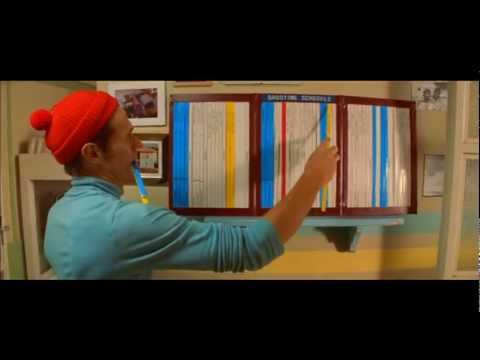
Devo / Gut Feeling
This ^^
Many guitar and/or bass riffs, drum beats, melody lines are written because they simply sound/feel good and/or have a certain groove. The actual time signature does not matter because people are playing to the riff or melody (hum the guitar/bass line of Pink Floyd's Money). Counting is not necessary because the line/pattern is memorable. Soloing over odd time = much more difficult. Repeated listening/playing over a particular groove is the only way. It will eventually be burned into your musical memory.
F> @Fruitbat1919 said:
Listen Money, Pink Floyd... the way they go into 4/4 when the guitar solo begins, is heavenly!
I believe the main theme is in 7/4 or a mix between 4/4 & 3/4
Also ELP - TARKUS, the main theme is immensely cool.
Just a tip from an old prog rocker
I gotta admit I skipped past all the stuff you're throwing out. Not that it isn't interesting or useful but I think Zappa and his son have both explained odd time sigs in the best way possible:
Count in groups of 2 and 3. Nothing more, no maths... nothing complicated.
There is really no reason to go any further than that. I'm an associate level piano player, we never touch on anything outside of that when it comes to rhythm.
Sorry if that comes off as arrogant. I can barely play anymore due to a hand injury so I'm not trying to brag...
Zappa (as mentioned numerous times) has a knack of making odd time signatures feel smooth. "Outside Now" is a great example in 11/8.
Here is a good resource of diverse examples.
https://en.m.wikipedia.org/wiki/List_of_musical_works_in_unusual_time_signatures
Strictly speaking, since each ‘beat’ in Money is subdivided into 3, the time sigs are 21/8 and 12/8 during the solos.
Large swathes of this song by my old band are in 9/8.
Even though my compositions are technically 4/4 I tend to put in little breaks in between verses or choruses. It’s a pain mapping this in Auria so I don’t bother anymore. I just use the 4/4 grid with some parts being a few beats behind or ahead or just use the DAW gridless.
This is mostly me. I never change the time sig but don't stick to it either. Often 5/8 breaks here and there, totally by feel. Or phasing with sequencers. Ya gotta dominate the grid, not the other way round.
Don't worry if it's not only for weird measures, it's even for impossible ones. Dr. Aschero being Musicologist Doctor having expent all his life in finding new way of notation. He also explains how the actual notation system only is used by 5% of population being part of the 95% amazing musicians whom can't read the music they play.
In addition to that he studied the wichis who had time signatures impossible to draw with actual/classical notation so he had to develop a new system to draw these and update the notation system.
Since we learn mostly visual, ear trainning is obviously useful but not the best way too. IDK if Zappa proposes any kind of system (due I need to check all your useful links too) but I was trying to point there is a modern system based in nature, science and pedagogy that could draw any time signature and could be useful to anyone who, aside learn for itself, wants to share these patterns in a way anyone could handle them.
I will check the Zappa video you have posted to see what brings but difficult will be more revolutionary and useful than Dr. Aschero work. He's proposal goes further than just understanding the maths rear rhythym, in fact is Math which gains sound.
This give the reason. You can attach to a grid but you couldn't draw it inside a musical sheet. That's the point of Aschero's system: using knowledge from others (the grid in this case which is a mathematical representation of time more scientific, logical and natural than pentagram and so)
From that link
With Aschero system there is only one draw possible and could be read from any part of the world with basic knowledge about form, light and sound or being adapted to the culture receiving it since it's based in nature.
I will dig further but it's not a matter of being pedantic or not, it's just opposite. Imagine you find the way to talk alien language, will you keep it secret?
Me not since I want to chat with other aliens.
That's very cool actually! I love unconventional systems. Designing music with vector diagrams and that kind of thing.
I wasn't trying to be dissuasive, but I think you know.
I don't think I posted any links, but some of my numbers turned into links to nowhere.
Zappa philosophy is basically just, think in 2s and 3s. Stuff 5 notes into spaces where you expect 2 (ratchet) that kind of thing. Not sure if he was very systematic, just using the Slonimsky book for melodies.
And this is the answer from the first page after suggest that complexed Zappa song.
I can feel the rhythm but this is not trivial or the best example for noob (being myself and finding few steps behind @Fruitbat1919 )
Also I could bring some complex Flamenco signatures with amalgamas which I usually recommend to dance more than play to understand the accent and so but that was before finding this new system I point. It's a matter of time that anyone who puts the effort could draw any of these examples (Zappa, Chano Dominguez or even Jojo Mayer) with Numerophonics and then have something more than feelings to discuss what's happening.
That's my point for anyone who wants to take the chance
I will back with some stuff for the Zappa/Zeppelin fans and Arabic lovers. Hehe.
Ok let's share some Flamenco stuff including Fusion. I can't help too much with time signature since I listened a lot from dancing show and I gifted a DVD course for Spanish Cajón (not COjón which are truly ball, cojones balls) and remember some things but barely.
Accent is usually which makes the point. An example of Buleria pattern (these are a lot of ramifications varying from geographical zones so go figure...)
Again a square representation and size to determine accent (just saying)
Let's now with the Psychedelic Rock fans with Triana. This is very helpful because they decompose the parts until you can hear hand claps or usual guitar stabbing which was immersed inside the full composition.
Then into Fusión we can enjoy Chano Dominguez with Herbie Hancock and two dancers making each one their feelings and battle clash. Don't lost the track since I think is the best example of feeling as learning but obviously not the best as teaching (due there are happening lots of things at the same time)
Sorry the Dance Clash is in this with Wynton Marsalis... I recommend this one first than the Herbie one since it's a full concert (more than an Hour lol)
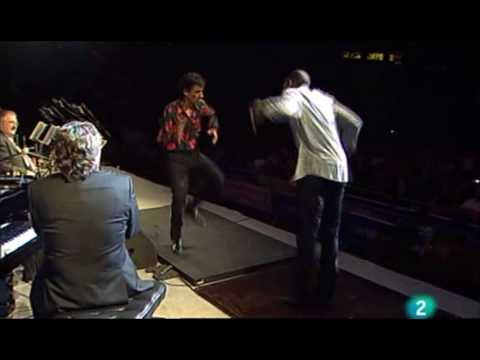
If someone wants more of anything I can bring, please tell me. I will very glad to continue sharing but I don't want to hijack or derail the topic with my teachings/learnings things. Just help and/or share.
Peace.
This nicely illustrates Zappa’s approach in subdividing across beats while keeping but often obscuring the underlying pulse and tempo. First the hard to follow version, then an arrangement with the pulse laid out plain as day...
Thanks for sharing. Have not seen that performance before.
There is a wiki page with lots of details on this. Hard to believe this is written in common time.
https://en.m.wikipedia.org/wiki/The_Black_Page
Nice version of the black page. Frank Zappa and Miles Davis are my top musicians. They made the odd sound so good
Find a song that has a memorable riff and > @espiegel123 said:
Thats good advice. I played with a guy that just did not have his brain wired for 4/4. He and I would practice just the two of us oftwn, just given relative schedules, we would be at practice before the drummer. He would always have these riffs. Catchy and memorable..and Id play along not thinking much about it.
Wasnt until the drummer got there that he'd be...wtf...11/8? 13/4?
Listening to music with odd time signatures is the time-tested way to "train" your brain to hear those different time signatures. It'll take some time to settle in your brain but it works.
You can try this now: Just set your sequencer to an odd number of steps - something other than 3 because 3/4 and 6/8 time is just too common (used in waltz and stuff). Ok, some even numbers are ok to use too, like 10, 14, and 18.
That's how I came up with this on Stroke Machine:
The old trick of breaking everything down to just counts of 2 and 3 also works.