Loopy Pro: Create music, your way.
What is Loopy Pro? — Loopy Pro is a powerful, flexible, and intuitive live looper, sampler, clip launcher and DAW for iPhone and iPad. At its core, it allows you to record and layer sounds in real-time to create complex musical arrangements. But it doesn’t stop there—Loopy Pro offers advanced tools to customize your workflow, build dynamic performance setups, and create a seamless connection between instruments, effects, and external gear.
Use it for live looping, sequencing, arranging, mixing, and much more. Whether you're a live performer, a producer, or just experimenting with sound, Loopy Pro helps you take control of your creative process.
Download on the App StoreLoopy Pro is your all-in-one musical toolkit. Try it for free today.
Musical Onboarding through iOS

What are your experiences in getting people started with music making through iOS? Any particular success story? Any insight as to what works a little bit less?
Been increasingly interested in expanding other people’s musicking horizons. Giving workshops on Sonic Pi or on Raspberry Pi musicking has been quite satisfying. And there’s a lot of deep learning happening for a teacher who enables someone else’s music-making abilities.
It also strikes me that there are quite a few attempts at developing apps which will make it easy for people to start creating music for the first time, especially on iOS. In fact, it’s almost a whole “genre” of promotional videos… music technology projects about “finally making music accessible to anyone” (without any mention of the fact that most of the world’s musical traditions have been very democratic from the very start, until the second half of the 20th Century, during which music became a commodity; still, let’s pretend musicking was always elitist).
It’s quite likely that many people’s musical awakening now happens through iOS apps. With someone like Grimes can get her start through the GarageBand app (on the desktop?), it’d stand to reason that other people will be able to appropriate iOS apps to develop their musicianship. In turn, this can have a big effect on the future of musical diversity, especially if we go beyond the 16-step sequence of “drum, bass, chords/pads, lead” drum machine and virtual analog synth in a couple of modes of the major scale (in twelve tone equal temperament (12TET)).
Spent a bit of time musicking with my nephew, on Christmas Eve and yesterday. He’s been learning the sax, has a Launchpad mini, and cares about all sorts of electronic stuff, including videogames. We had a blast musicking with the Launchpad app, PlayGround, and KRFT. Also introduced him to GridInstrument (which enables “scale mode” on his Launchpad mini). Lent him one of my WX-11 wind controllers and showed him how to use it with Magellan and GarageBand. Finally, taught him a few things about Ableton Live, using some loops from the Launchpad app. Clearly, my nephew’s ears have been opened wide through just a couple of hours of fun and informal musicking.
Just today, was able to get my partner to try Gestrument for a couple of minutes. Despite her professed lack of musical ability, she felt like she had the power to make music.
Powerful stuff.
At this point, it really feels to me that the key part of music democratization isn’t the app itself.
In some cases, it might be about finding the right app for the right person or the right context. It remains important to bring people to music in an appropriate way.
No offence to devs but it might really pay off if they listen to what musickers are doing instead of pushing “that one app which will change everything”.
To my mind, where the app can help is in the whole onboarding process. Sure, that can easily include an in-app tutorial. But that tutorial needs not be about “here’s how to do things the way the app expects them to be done”. Nor does it need to be about creating “a song”. But it can easily be about asking budding musickers the right questions. Get them to explore after hearing in their heads what might happen. Been watching some tutorials on Lynda.com and Kadenze, recently. Though they’re relatively useful when you have intrinsic motivation to train yourself for some specific tasks and some kind of project, it’s remarkable how little care is given to learning itself. Onboarding musickers through an app is an occasion to expand people’s minds, not some form of training manual for tax preparation.
In the past, been on the record about the PlayGround in-app onboarding experience. Sure, the app may not be everyone’s cup of tea. But there’s both a deep learning experience and a sense of pleasure when you start using this app. Maybe my own enthusiasm rubbed off, but it did work quite well with my nephew. Not that he’ll cherish the app for the rest of his life and have fond memories of the first time he jammed with his uncle with the Inria scene. But he quickly learnt some aspects of musical practice and was obviously having the kind of visceral pleasure which does lead to lasting memories.
But that’s all about in-app onboarding. To me, the onboarding process can be much broader. From app descriptions to videos made by third parties (the “haQ Effect”, from @jakoB_haQ?), much of what surrounds an app can have a deep impact on the way it’s appropriated by musickers. Even doing local workshops with a mind completely open to learning from those who try the app for the first time. Cool demos which really inspire you to create something that you have the power to create. Forums where new users are welcomed. Online sharing features allowing people to appreciate their friends’ musicking. Twitch sessions?
But maybe that’s just me. Would really be interested in knowing more about what has worked for other people along with good ideas which didn’t pan out or even cautionary tales.
Thanks!
Comments
tl;dr, buddy , but I would point them here: https://learningmusic.ableton.com
or maybe HookTheory: https://www.hooktheory.com
Yep, sorry. tl;dr. Summary?
I think those are all very interesting points, and furthermore, I’ll ask a provocative question in the midst of all that context. When people who are non-musically trained are faced with modern means of making music, how does it most often go? Does it go like this: I shall explore the sounds and structures that this thing seems capable of, and keep going until I get something I like, then move on from there in an additive fashion and keep going until I get something I like, and so on. Or does it go like this: I have a vague criteria (which may even be so well-formed as to be an idea) of what I want to structure it like or make it sound like or express this feeling or create a hook I have running through my head - can this thing help me do that, and how?
Sure thing:
Got my thoughts on that Ableton minisite. How would you describe your experience? Did you try it with somebody who doesn’t have much background in music?
Thanks for the suggestion. In your experience, when does it become important to know about theory?
Thanks for the question. Sounds more like a leading question than a provocative one, but that’s par for the course.
In my experience, it tends to be about the quickest win possible, at first. Get them to play (with) something they recognize as music. Can be a little melody, a neat sample, or some kind of funky pattern. Major pentatonic tends to work quite well, which might be part of the reason Figure can work in such a context. Same thing with Ampify Groovebox.
But, then, the two paths diverge. Some people will have fun exploring where things can lead them, training their ears at the same time while keeping an open mind. Others will try to emulate something they know, possibly mouthing it as they go along. Not really in terms of overall structure, but at least in terms of a riff or a groove. This is more likely to happen with people who do have some background in music but are trying a new “instrument”. But it might happen with those who are really knew, especially if they hear something which reminds them of something else. “How do we make it go like ta-tada-tada?”
Then again, my experiences tend to be with teachers and teenagers. Might be very different with other people.
Have your experiences been similar?
I haven’t had that much experience sharing the tech with other people, but there was this one occasion, about, oh, about 20 years ago, no, more than that, when my friend said he woke up with a song in his head, and had to capture it somehow next time this happened. He didn’t know any music theory or music notation, and couldn’t play an instrument and didn’t have one. I had a Yamaha QY10, which I quite happily gave to him and told him how to use it on a basic level. This allowed me to then buy a Yamaha QY20 some time later, so I’m glad of that. Apparently, he never actually touched it, and probably still has it in the little videocassette case it came in.
That’s all.
Neat!
There probably isn’t any tool which can magically translate what our brains hear into a musical output. Still, it’s probably a fruitful path, even if your friend didn’t follow through with this.
As a monophonic player, my toughest issue is probably to hear chords in my head and not being able to identify them or reproduce them. Should probably go back to ear training. Was never that good at it and it’s been close to thirty years.
Every chord sounds good to me as long as they are not all playing at the same time.
Wait, chords can sound good? Mind you, I grew up heavily influenced by the Diagram Brothers and their Discordo concept.
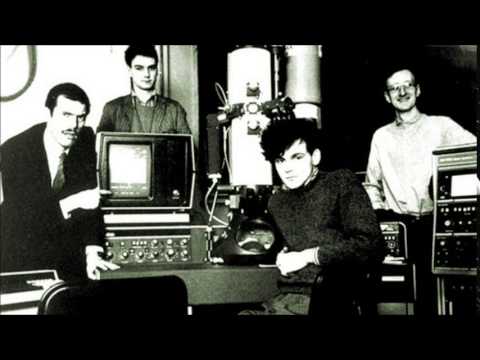
And?
I've not been through it. Just sharing the resource. Not sure I'd get much out of it, but it looks like it might be useful as an intro.
I don't know that it is. I would say it depends on the person and what their interests are. I've heard plenty of arguments on both sides of the debate about learning music theory, and I doubt anything will be universally agreed upon.
HookTheory looks like it could be a shortcut to at least the fundamentals of music theory -- both in cost and time.
Basically: the idea is neat on paper and the implementation is very cool. But it only encourages one very specific approach to music, which happens to be Ableton-savvy, and it doesn’t really push for much experimentation.
Excellent! Sounds like you might be on the fence yourself.
Well, it is in beta, and fairly new. Why not share your thoughts with Ableton?
If someone is interested in making music, I wouldn't try to shove theory down their throat. I suppose I would recommend learning music theory on an as needed basis, rather than time-consuming, expensive formal training.
Did so, at the time.
Nice attitude. Even gives me some ideas for ways to make something like this work. People start playing and you introduce a bit of theory when it’s needed. Probably easier to do through peer-learning instead of the AI “magic sauce”.
The big thing I have against music theory is that it is arbitrary. It was taught to me as if it is a set of rules, but nobody explained why it is this and not that. An unusual rigidity and obedience to using it validly. Not like painting or drawing. There shouldn’t be this stupid staggering of tone tone tone tone semitone semitone semitone semitone, tone. It should be whatever I like, whenever I like. There shouldn’t be this uncomfortable avoidance of neighbouring keys. It is a lot more natural and certainly easier to hit several keys that are neighbours. There shouldn’t be this ridiculous division between a sound that has lots of harmonics but is monotone, and a chord comprised of simpler sounds but put together at the same time. I shouldn’t be frowned upon if I call 4/4 at 100bpm instead 8/8 at 50bpm (with the accents wherever I like, whenever I like). Stupid rules.