Loopy Pro: Create music, your way.

What is Loopy Pro?Loopy Pro is a powerful, flexible, and intuitive live looper, sampler, clip launcher and DAW for iPhone and iPad. At its core, it allows you to record and layer sounds in real-time to create complex musical arrangements. But it doesn’t stop there—Loopy Pro offers advanced tools to customize your workflow, build dynamic performance setups, and create a seamless connection between instruments, effects, and external gear.

Use it for live looping, sequencing, arranging, mixing, and much more. Whether you're a live performer, a producer, or just experimenting with sound, Loopy Pro helps you take control of your creative process.

Download on the App Store

Loopy Pro is your all-in-one musical toolkit. Try it for free today.

How to hack submix groups into ANY iOS host app (including Cubasis and ApeMatrix)

We updated our visual mixer plugin yesterday. This video shows how the new version can be used to get submix-like controls for volume, pan, mute, and solo on entire groups of tracks, even if your audio unit host app doesn't actually support submixes:
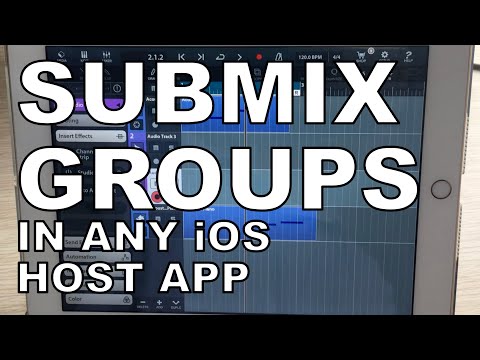
Note, this works because the Visual Mixer plugin puts two layers of volume, pan, and mute/solo controls on each individual track. The first layer is for the track itself and the second layer is linked to other tracks in the same group in order to simulate a submix bus without actually sending the audio to a submix. So this gives you control over volume and pan as if the tracks were in a submix bus but since it never actually mixes the audio from the tracks together, it cannot run all tracks in a group through a single reverb plugin, for example.

Visual Mixer on the App Store:
https://apps.apple.com/us/app/visual-mixer/id1482739499

«1

Comments

  • Nicely done 👏👏👏👏its a shame that a big company like Steinberg still haven’t implemented this.

  • @Paa89 said:
    Nicely done 👏👏👏👏its a shame that a big company like Steinberg still haven’t implemented this.

    I suspect they will.

  • @Blue_Mangoo said:

    @Paa89 said:
    Nicely done 👏👏👏👏its a shame that a big company like Steinberg still haven’t implemented this.

    I suspect they will.

    We don't yet know what @LFS and his team are cooking for the next major update :D

  • edited November 2019

    Thanks @Blue_Mangoo it is an acceptable solution, what is quite unacceptable is the lack of real groups and busses in a "pro" sequencer. I hope in the next update, I am, after all, an optimist...

  • Thanks for the video @Blue_Mangoo great stuff.

    @Samu I see Cubase got a big update this week I’m wondering if Cubasis 2 will follow.

  • Yes, great job.

    And bring on the Cubasis update!
    I have been neglecting that one lately.

  • @CracklePot said:
    Yes, great job.

    And bring on the Cubasis update!
    I have been neglecting that one lately.

    Same here. NS2 or X2 + AUM for me. Cubasis is looking very tired these days.

  • @audio_DT said:

    @CracklePot said:
    Yes, great job.

    And bring on the Cubasis update!
    I have been neglecting that one lately.

    Same here. NS2 or X2 + AUM for me. Cubasis is looking very tired these days.

    I have been just recently getting into NS2. Frickin’ brilliant, that one.
    I have also been using MTR and MidiTools Route in there, and it is very nice.
    Next I will incorporate the AU Auditor player into NS2 for triggerable audio clips,
    as well as try the Buss techniques shown in the video above.

  • @CracklePot said:

    @audio_DT said:

    @CracklePot said:
    Yes, great job.

    And bring on the Cubasis update!
    I have been neglecting that one lately.

    Same here. NS2 or X2 + AUM for me. Cubasis is looking very tired these days.

    I have been just recently getting into NS2. Frickin’ brilliant, that one.
    I have also been using MTR and MidiTools Route in there, and it is very nice.
    Next I will incorporate the AU Auditor player into NS2 for triggerable audio clips,
    as well as try the Buss techniques shown in the video above.

    Yeah, I agree. I got NS2 when it first came out but never really used it. But when I started looking at it properly I was like, ‘whoa!’ Once it gets proper midi routing and audio tracks it will be undisputed heavyweight of the world.

  • edited November 2019

    @audio_DT said:

    @CracklePot said:
    Yes, great job.

    And bring on the Cubasis update!
    I have been neglecting that one lately.

    Same here. NS2 or X2 + AUM for me. Cubasis is looking very tired these days.

    many apps that were at the top of the iOS world when they came out now languish for years without updates. Some of our own apps are on that list.

    Some iOS devs are learning to adapt to the pricing and update model of the App Store. The question is, if your company charges $10 for a product and your desktop counterparts charge $250 for a product that does something similar, then how does your business operate? Some have given up and said it’s impossible but obviously it’s not impossible because many devs are making it work.

    In the iOS music app world, The solution is you have to make more apps, each with simpler functionality, and you can’t spend years developing them like the desktop devs do. You need a new release every two months to stay in business. As I write this, Bram Bos comes to mind as an example of a dev who has figured out how to make this model work. He makes a large number of great apps and none of them is excessively complicated.

    The consequence of that business model is that we do not add major new features to existing apps.

    Think about Steinberg’s situation: if they add submix capability, they will have to do a major rewrite of core functionality. It will take them months to develop it and years to handle the bug reports and patch it till it is stable. When they release that feature we will all cheer but who here is going to pay them for the cost of it all? We already bought the app and we are entitled to lifetime free updates.

    The way out for Steinberg is to make the next major version of Cubasis a separate app.

  • @Blue_Mangoo said:

    @audio_DT said:

    @CracklePot said:
    Yes, great job.

    And bring on the Cubasis update!
    I have been neglecting that one lately.

    Same here. NS2 or X2 + AUM for me. Cubasis is looking very tired these days.

    many apps that were at the top of the iOS world when they came out now languish for years without updates. Some of our own apps are on that list.

    Some iOS devs are learning to adapt to the pricing and update model of the App Store. The question is, if your company charges $10 for a product and your desktop counterparts charge $250 for a product that does something similar, then how does your business operate? Some have given up and said it’s impossible but obviously it’s not impossible because many devs are making it work.

    In the iOS music app world, The solution is you have to make more apps, each with simpler functionality, and you can’t spend years developing them like the desktop devs do. You need a new release every two months to stay in business. As I write this, Bram Bos comes to mind as an example of a dev who has figured out how to make this model work. He makes a large number of great apps and none of them is excessively complicated.

    The consequence of that business model is that we do not add major new features to existing apps.

    Think about Steinberg’s situation: if they add submix capability, they will have to do a major rewrite of core functionality. It will take them months to develop it and years to handle the bug reports and patch it till it is stable. When they release that feature we will all cheer but who here is going to pay them for the cost of it all? We already bought the app and we are entitled to lifetime free updates.

    The way out for Steinberg is to make the next major version of Cubasis a separate app.

    I agree with you completely, as it happens, on all points. At some point, iOS users are going to have to accept higher prices if they want higher quality. I would happily pay more for a full-function sequencer, but I do of course understand that there is a mindset now for many users that ‘iOS apps should be near costless’. I don’t share that view, though I also, of course, feel bad for those who wouldn’t be able to afford more expensive gear. But it’s the system we live in - capitalism (which I don’t like, philosophically) - and there is no free lunch. As I say, for my part, I would be very happy to pay, say, £100 for a new version of cubasis that looked more like its desktop big brother. I would pay even more if it really pushed that boat out a bit because I would love something like that on my iPad. I do ‘get’ the issues for you devs, though, and you have my sympathy on the matter.

  • @audio_DT said:

    @Blue_Mangoo said:

    @audio_DT said:

    @CracklePot said:
    Yes, great job.

    And bring on the Cubasis update!
    I have been neglecting that one lately.

    Same here. NS2 or X2 + AUM for me. Cubasis is looking very tired these days.

    many apps that were at the top of the iOS world when they came out now languish for years without updates. Some of our own apps are on that list.

    Some iOS devs are learning to adapt to the pricing and update model of the App Store. The question is, if your company charges $10 for a product and your desktop counterparts charge $250 for a product that does something similar, then how does your business operate? Some have given up and said it’s impossible but obviously it’s not impossible because many devs are making it work.

    In the iOS music app world, The solution is you have to make more apps, each with simpler functionality, and you can’t spend years developing them like the desktop devs do. You need a new release every two months to stay in business. As I write this, Bram Bos comes to mind as an example of a dev who has figured out how to make this model work. He makes a large number of great apps and none of them is excessively complicated.

    The consequence of that business model is that we do not add major new features to existing apps.

    Think about Steinberg’s situation: if they add submix capability, they will have to do a major rewrite of core functionality. It will take them months to develop it and years to handle the bug reports and patch it till it is stable. When they release that feature we will all cheer but who here is going to pay them for the cost of it all? We already bought the app and we are entitled to lifetime free updates.

    The way out for Steinberg is to make the next major version of Cubasis a separate app.

    I agree with you completely, as it happens, on all points. At some point, iOS users are going to have to accept higher prices if they want higher quality. I would happily pay more for a full-function sequencer, but I do of course understand that there is a mindset now for many users that ‘iOS apps should be near costless’. I don’t share that view, though I also, of course, feel bad for those who wouldn’t be able to afford more expensive gear. But it’s the system we live in - capitalism (which I don’t like, philosophically) - and there is no free lunch. As I say, for my part, I would be very happy to pay, say, £100 for a new version of cubasis that looked more like its desktop big brother. I would pay even more if it really pushed that boat out a bit because I would love something like that on my iPad. I do ‘get’ the issues for you devs, though, and you have my sympathy on the matter.

    Well I don’t mean to be complaining about the situation. iOS is a different market and a different mindset, but I hope that as it matures it doesn’t become better or worse than desktop software markets; it just works differently. For devs, it’s fine as long as we understand it and don’t try to build overly complex apps. Everything has to be done in bite-sized pieces. It’s kind of fun actually. Working on long projects can get really boring. Doing short projects means you get to work on a lot of different ideas In a short time frame and you’re always doing something new.

    But in the case of a full featured DAW, I don’t see how the developer could keep it simple and still satisfy customers.

  • @Blue_Mangoo you made me consider things from a different point of view, and I thank you for that. I am aware that the situation of the devs is not easy, but the same can be said for the musicians who use the programs. Almost never any exponent of these two categories can live with this job/passion and this can be frustrating. Not many can afford to spend hundreds or thousands of euros, dollars, pounds to buy music softwares that then will not bring any economic benefit, in the long run it becomes unsustainable.
    Small prices for small apps, it can be a good compromise, and it keeps you fairly sheltered from piracy that hasn't caught on iOS even because of its affordable prices. We have to live together, without the exorbitant demands of the users but even without some apps remaining without updates, despite having bugs, for months and months.
    Thank you for your efforts in your disclosure work and, of course, in your excellent apps. Peace.

  • @Blue_Mangoo said:

    @audio_DT said:

    @Blue_Mangoo said:

    @audio_DT said:

    @CracklePot said:
    Yes, great job.

    And bring on the Cubasis update!
    I have been neglecting that one lately.

    Same here. NS2 or X2 + AUM for me. Cubasis is looking very tired these days.

    many apps that were at the top of the iOS world when they came out now languish for years without updates. Some of our own apps are on that list.

    Some iOS devs are learning to adapt to the pricing and update model of the App Store. The question is, if your company charges $10 for a product and your desktop counterparts charge $250 for a product that does something similar, then how does your business operate? Some have given up and said it’s impossible but obviously it’s not impossible because many devs are making it work.

    In the iOS music app world, The solution is you have to make more apps, each with simpler functionality, and you can’t spend years developing them like the desktop devs do. You need a new release every two months to stay in business. As I write this, Bram Bos comes to mind as an example of a dev who has figured out how to make this model work. He makes a large number of great apps and none of them is excessively complicated.

    The consequence of that business model is that we do not add major new features to existing apps.

    Think about Steinberg’s situation: if they add submix capability, they will have to do a major rewrite of core functionality. It will take them months to develop it and years to handle the bug reports and patch it till it is stable. When they release that feature we will all cheer but who here is going to pay them for the cost of it all? We already bought the app and we are entitled to lifetime free updates.

    The way out for Steinberg is to make the next major version of Cubasis a separate app.

    I agree with you completely, as it happens, on all points. At some point, iOS users are going to have to accept higher prices if they want higher quality. I would happily pay more for a full-function sequencer, but I do of course understand that there is a mindset now for many users that ‘iOS apps should be near costless’. I don’t share that view, though I also, of course, feel bad for those who wouldn’t be able to afford more expensive gear. But it’s the system we live in - capitalism (which I don’t like, philosophically) - and there is no free lunch. As I say, for my part, I would be very happy to pay, say, £100 for a new version of cubasis that looked more like its desktop big brother. I would pay even more if it really pushed that boat out a bit because I would love something like that on my iPad. I do ‘get’ the issues for you devs, though, and you have my sympathy on the matter.

    Well I don’t mean to be complaining about the situation. iOS is a different market and a different mindset, but I hope that as it matures it doesn’t become better or worse than desktop software markets; it just works differently. For devs, it’s fine as long as we understand it and don’t try to build overly complex apps. Everything has to be done in bite-sized pieces. It’s kind of fun actually. Working on long projects can get really boring. Doing short projects means you get to work on a lot of different ideas In a short time frame and you’re always doing something new.

    But in the case of a full featured DAW, I don’t see how the developer could keep it simple and still satisfy customers.

    Yeah, I agree with all that, I think. From my perspective as an amateur end user, the ideal ‘compromise’ would be spending a lot of money on a full-fledged DAW that ‘does everything’, and then keeping the AU instruments, midi and effects stuff in just the way they are now - cheap, innovative, and fantastically interesting. I often find myself having that nagging feeling - ‘it only the DAWS would do this, everything would be great’. But, of course, I know this indicates a certain mindset itself, ie ‘everything is at the end of the rainbow’! I do love music-making on iOS, though, and I like the fact that it’s still the ‘wild west’ days of the platform.

  • edited November 2019

    @audio_DT said:

    @Blue_Mangoo said:

    @audio_DT said:

    @Blue_Mangoo said:

    @audio_DT said:

    @CracklePot said:
    Yes, great job.

    And bring on the Cubasis update!
    I have been neglecting that one lately.

    Same here. NS2 or X2 + AUM for me. Cubasis is looking very tired these days.

    many apps that were at the top of the iOS world when they came out now languish for years without updates. Some of our own apps are on that list.

    Some iOS devs are learning to adapt to the pricing and update model of the App Store. The question is, if your company charges $10 for a product and your desktop counterparts charge $250 for a product that does something similar, then how does your business operate? Some have given up and said it’s impossible but obviously it’s not impossible because many devs are making it work.

    In the iOS music app world, The solution is you have to make more apps, each with simpler functionality, and you can’t spend years developing them like the desktop devs do. You need a new release every two months to stay in business. As I write this, Bram Bos comes to mind as an example of a dev who has figured out how to make this model work. He makes a large number of great apps and none of them is excessively complicated.

    The consequence of that business model is that we do not add major new features to existing apps.

    Think about Steinberg’s situation: if they add submix capability, they will have to do a major rewrite of core functionality. It will take them months to develop it and years to handle the bug reports and patch it till it is stable. When they release that feature we will all cheer but who here is going to pay them for the cost of it all? We already bought the app and we are entitled to lifetime free updates.

    The way out for Steinberg is to make the next major version of Cubasis a separate app.

    I agree with you completely, as it happens, on all points. At some point, iOS users are going to have to accept higher prices if they want higher quality. I would happily pay more for a full-function sequencer, but I do of course understand that there is a mindset now for many users that ‘iOS apps should be near costless’. I don’t share that view, though I also, of course, feel bad for those who wouldn’t be able to afford more expensive gear. But it’s the system we live in - capitalism (which I don’t like, philosophically) - and there is no free lunch. As I say, for my part, I would be very happy to pay, say, £100 for a new version of cubasis that looked more like its desktop big brother. I would pay even more if it really pushed that boat out a bit because I would love something like that on my iPad. I do ‘get’ the issues for you devs, though, and you have my sympathy on the matter.

    Well I don’t mean to be complaining about the situation. iOS is a different market and a different mindset, but I hope that as it matures it doesn’t become better or worse than desktop software markets; it just works differently. For devs, it’s fine as long as we understand it and don’t try to build overly complex apps. Everything has to be done in bite-sized pieces. It’s kind of fun actually. Working on long projects can get really boring. Doing short projects means you get to work on a lot of different ideas In a short time frame and you’re always doing something new.

    But in the case of a full featured DAW, I don’t see how the developer could keep it simple and still satisfy customers.

    Yeah, I agree with all that, I think. From my perspective as an amateur end user, the ideal ‘compromise’ would be spending a lot of money on a full-fledged DAW that ‘does everything’, and then keeping the AU instruments, midi and effects stuff in just the way they are now - cheap, innovative, and fantastically interesting. I often find myself having that nagging feeling - ‘it only the DAWS would do this, everything would be great’. But, of course, I know this indicates a certain mindset itself, ie ‘everything is at the end of the rainbow’! I do love music-making on iOS, though, and I like the fact that it’s still the ‘wild west’ days of the platform.

    Yes.

    I am really happy with making plugins that are simple and to the point. But I would like a DAW that does everything. the appropriate price for such a DAW would be exactly the same price it costs on the desktop because developing on iOS is no different from Desktop OS development in terms of development cost.

    Edit: it just occurred to me that there is one desktop DAW that is very affordable and still full featured: it’s Reaper. Maybe they are the developers we should call on to make our dream DAW for iOS?

  • @Blue_Mangoo said:

    @audio_DT said:

    @Blue_Mangoo said:

    @audio_DT said:

    @Blue_Mangoo said:

    @audio_DT said:

    @CracklePot said:
    Yes, great job.

    And bring on the Cubasis update!
    I have been neglecting that one lately.

    Same here. NS2 or X2 + AUM for me. Cubasis is looking very tired these days.

    many apps that were at the top of the iOS world when they came out now languish for years without updates. Some of our own apps are on that list.

    Some iOS devs are learning to adapt to the pricing and update model of the App Store. The question is, if your company charges $10 for a product and your desktop counterparts charge $250 for a product that does something similar, then how does your business operate? Some have given up and said it’s impossible but obviously it’s not impossible because many devs are making it work.

    In the iOS music app world, The solution is you have to make more apps, each with simpler functionality, and you can’t spend years developing them like the desktop devs do. You need a new release every two months to stay in business. As I write this, Bram Bos comes to mind as an example of a dev who has figured out how to make this model work. He makes a large number of great apps and none of them is excessively complicated.

    The consequence of that business model is that we do not add major new features to existing apps.

    Think about Steinberg’s situation: if they add submix capability, they will have to do a major rewrite of core functionality. It will take them months to develop it and years to handle the bug reports and patch it till it is stable. When they release that feature we will all cheer but who here is going to pay them for the cost of it all? We already bought the app and we are entitled to lifetime free updates.

    The way out for Steinberg is to make the next major version of Cubasis a separate app.

    I agree with you completely, as it happens, on all points. At some point, iOS users are going to have to accept higher prices if they want higher quality. I would happily pay more for a full-function sequencer, but I do of course understand that there is a mindset now for many users that ‘iOS apps should be near costless’. I don’t share that view, though I also, of course, feel bad for those who wouldn’t be able to afford more expensive gear. But it’s the system we live in - capitalism (which I don’t like, philosophically) - and there is no free lunch. As I say, for my part, I would be very happy to pay, say, £100 for a new version of cubasis that looked more like its desktop big brother. I would pay even more if it really pushed that boat out a bit because I would love something like that on my iPad. I do ‘get’ the issues for you devs, though, and you have my sympathy on the matter.

    Well I don’t mean to be complaining about the situation. iOS is a different market and a different mindset, but I hope that as it matures it doesn’t become better or worse than desktop software markets; it just works differently. For devs, it’s fine as long as we understand it and don’t try to build overly complex apps. Everything has to be done in bite-sized pieces. It’s kind of fun actually. Working on long projects can get really boring. Doing short projects means you get to work on a lot of different ideas In a short time frame and you’re always doing something new.

    But in the case of a full featured DAW, I don’t see how the developer could keep it simple and still satisfy customers.

    Yeah, I agree with all that, I think. From my perspective as an amateur end user, the ideal ‘compromise’ would be spending a lot of money on a full-fledged DAW that ‘does everything’, and then keeping the AU instruments, midi and effects stuff in just the way they are now - cheap, innovative, and fantastically interesting. I often find myself having that nagging feeling - ‘it only the DAWS would do this, everything would be great’. But, of course, I know this indicates a certain mindset itself, ie ‘everything is at the end of the rainbow’! I do love music-making on iOS, though, and I like the fact that it’s still the ‘wild west’ days of the platform.

    Yes.

    I am really happy with making plugins that are simple and to the point. But I would like a DAW that does everything. the appropriate price for such a DAW would be exactly the same price it costs on the desktop because developing on iOS is no different from Desktop OS development in terms of development cost.

    Edit: it just occurred to me that there is one desktop DAW that is very affordable and still full featured: it’s Reaper. Maybe they are the developers we should call on to make our dream DAW for iOS?

    Yes, maybe. Tbh, though, I just hope that one of the 'big boys' (eg Steinberg) take a punt and do a full emulation of their major desktop DAW on iOS. Would I pay for it? Absolutely. I reckon there must be enough of a critical mass now to make this work financially, but I confess that I don't know the economics of the business in any detail. But I'm no expert at making music and I would very happily hand my money over for a full-on DAW. I must assume that if I - an enthusiastic amateur (emphasis on both words) - would be happy to do that, so too would many others, many far, far more expert than I. It would be a bit of a transformatory moment in the development of music-making on the platform, definitely, but one I would welcome with an open chequebook.

  • edited November 2019

    @audio_DT said:

    @Blue_Mangoo said:

    @audio_DT said:

    @Blue_Mangoo said:

    @audio_DT said:

    @Blue_Mangoo said:

    @audio_DT said:

    @CracklePot said:
    Yes, great job.

    And bring on the Cubasis update!
    I have been neglecting that one lately.

    Same here. NS2 or X2 + AUM for me. Cubasis is looking very tired these days.

    many apps that were at the top of the iOS world when they came out now languish for years without updates. Some of our own apps are on that list.

    Some iOS devs are learning to adapt to the pricing and update model of the App Store. The question is, if your company charges $10 for a product and your desktop counterparts charge $250 for a product that does something similar, then how does your business operate? Some have given up and said it’s impossible but obviously it’s not impossible because many devs are making it work.

    In the iOS music app world, The solution is you have to make more apps, each with simpler functionality, and you can’t spend years developing them like the desktop devs do. You need a new release every two months to stay in business. As I write this, Bram Bos comes to mind as an example of a dev who has figured out how to make this model work. He makes a large number of great apps and none of them is excessively complicated.

    The consequence of that business model is that we do not add major new features to existing apps.

    Think about Steinberg’s situation: if they add submix capability, they will have to do a major rewrite of core functionality. It will take them months to develop it and years to handle the bug reports and patch it till it is stable. When they release that feature we will all cheer but who here is going to pay them for the cost of it all? We already bought the app and we are entitled to lifetime free updates.

    The way out for Steinberg is to make the next major version of Cubasis a separate app.

    I agree with you completely, as it happens, on all points. At some point, iOS users are going to have to accept higher prices if they want higher quality. I would happily pay more for a full-function sequencer, but I do of course understand that there is a mindset now for many users that ‘iOS apps should be near costless’. I don’t share that view, though I also, of course, feel bad for those who wouldn’t be able to afford more expensive gear. But it’s the system we live in - capitalism (which I don’t like, philosophically) - and there is no free lunch. As I say, for my part, I would be very happy to pay, say, £100 for a new version of cubasis that looked more like its desktop big brother. I would pay even more if it really pushed that boat out a bit because I would love something like that on my iPad. I do ‘get’ the issues for you devs, though, and you have my sympathy on the matter.

    Well I don’t mean to be complaining about the situation. iOS is a different market and a different mindset, but I hope that as it matures it doesn’t become better or worse than desktop software markets; it just works differently. For devs, it’s fine as long as we understand it and don’t try to build overly complex apps. Everything has to be done in bite-sized pieces. It’s kind of fun actually. Working on long projects can get really boring. Doing short projects means you get to work on a lot of different ideas In a short time frame and you’re always doing something new.

    But in the case of a full featured DAW, I don’t see how the developer could keep it simple and still satisfy customers.

    Yeah, I agree with all that, I think. From my perspective as an amateur end user, the ideal ‘compromise’ would be spending a lot of money on a full-fledged DAW that ‘does everything’, and then keeping the AU instruments, midi and effects stuff in just the way they are now - cheap, innovative, and fantastically interesting. I often find myself having that nagging feeling - ‘it only the DAWS would do this, everything would be great’. But, of course, I know this indicates a certain mindset itself, ie ‘everything is at the end of the rainbow’! I do love music-making on iOS, though, and I like the fact that it’s still the ‘wild west’ days of the platform.

    Yes.

    I am really happy with making plugins that are simple and to the point. But I would like a DAW that does everything. the appropriate price for such a DAW would be exactly the same price it costs on the desktop because developing on iOS is no different from Desktop OS development in terms of development cost.

    Edit: it just occurred to me that there is one desktop DAW that is very affordable and still full featured: it’s Reaper. Maybe they are the developers we should call on to make our dream DAW for iOS?

    Yes, maybe. Tbh, though, I just hope that one of the 'big boys' (eg Steinberg) take a punt and do a full emulation of their major desktop DAW on iOS. Would I pay for it? Absolutely. I reckon there must be enough of a critical mass now to make this work financially, but I confess that I don't know the economics of the business in any detail. But I'm no expert at making music and I would very happily hand my money over for a full-on DAW. I must assume that if I - an enthusiastic amateur (emphasis on both words) - would be happy to do that, so too would many others, many far, far more expert than I. It would be a bit of a transformatory moment in the development of music-making on the platform, definitely, but one I would welcome with an open chequebook.

    That's more than I paid for my iPad. :(

    The price of Logic Pro is more acceptable to me. I'd consider buying Logic for iOS if Apple released a full-cost version.

  • @Blue_Mangoo said:

    @audio_DT said:

    @Blue_Mangoo said:

    @audio_DT said:

    @Blue_Mangoo said:

    @audio_DT said:

    @Blue_Mangoo said:

    @audio_DT said:

    @CracklePot said:
    Yes, great job.

    And bring on the Cubasis update!
    I have been neglecting that one lately.

    Same here. NS2 or X2 + AUM for me. Cubasis is looking very tired these days.

    many apps that were at the top of the iOS world when they came out now languish for years without updates. Some of our own apps are on that list.

    Some iOS devs are learning to adapt to the pricing and update model of the App Store. The question is, if your company charges $10 for a product and your desktop counterparts charge $250 for a product that does something similar, then how does your business operate? Some have given up and said it’s impossible but obviously it’s not impossible because many devs are making it work.

    In the iOS music app world, The solution is you have to make more apps, each with simpler functionality, and you can’t spend years developing them like the desktop devs do. You need a new release every two months to stay in business. As I write this, Bram Bos comes to mind as an example of a dev who has figured out how to make this model work. He makes a large number of great apps and none of them is excessively complicated.

    The consequence of that business model is that we do not add major new features to existing apps.

    Think about Steinberg’s situation: if they add submix capability, they will have to do a major rewrite of core functionality. It will take them months to develop it and years to handle the bug reports and patch it till it is stable. When they release that feature we will all cheer but who here is going to pay them for the cost of it all? We already bought the app and we are entitled to lifetime free updates.

    The way out for Steinberg is to make the next major version of Cubasis a separate app.

    I agree with you completely, as it happens, on all points. At some point, iOS users are going to have to accept higher prices if they want higher quality. I would happily pay more for a full-function sequencer, but I do of course understand that there is a mindset now for many users that ‘iOS apps should be near costless’. I don’t share that view, though I also, of course, feel bad for those who wouldn’t be able to afford more expensive gear. But it’s the system we live in - capitalism (which I don’t like, philosophically) - and there is no free lunch. As I say, for my part, I would be very happy to pay, say, £100 for a new version of cubasis that looked more like its desktop big brother. I would pay even more if it really pushed that boat out a bit because I would love something like that on my iPad. I do ‘get’ the issues for you devs, though, and you have my sympathy on the matter.

    Well I don’t mean to be complaining about the situation. iOS is a different market and a different mindset, but I hope that as it matures it doesn’t become better or worse than desktop software markets; it just works differently. For devs, it’s fine as long as we understand it and don’t try to build overly complex apps. Everything has to be done in bite-sized pieces. It’s kind of fun actually. Working on long projects can get really boring. Doing short projects means you get to work on a lot of different ideas In a short time frame and you’re always doing something new.

    But in the case of a full featured DAW, I don’t see how the developer could keep it simple and still satisfy customers.

    Yeah, I agree with all that, I think. From my perspective as an amateur end user, the ideal ‘compromise’ would be spending a lot of money on a full-fledged DAW that ‘does everything’, and then keeping the AU instruments, midi and effects stuff in just the way they are now - cheap, innovative, and fantastically interesting. I often find myself having that nagging feeling - ‘it only the DAWS would do this, everything would be great’. But, of course, I know this indicates a certain mindset itself, ie ‘everything is at the end of the rainbow’! I do love music-making on iOS, though, and I like the fact that it’s still the ‘wild west’ days of the platform.

    Yes.

    I am really happy with making plugins that are simple and to the point. But I would like a DAW that does everything. the appropriate price for such a DAW would be exactly the same price it costs on the desktop because developing on iOS is no different from Desktop OS development in terms of development cost.

    Edit: it just occurred to me that there is one desktop DAW that is very affordable and still full featured: it’s Reaper. Maybe they are the developers we should call on to make our dream DAW for iOS?

    Yes, maybe. Tbh, though, I just hope that one of the 'big boys' (eg Steinberg) take a punt and do a full emulation of their major desktop DAW on iOS. Would I pay for it? Absolutely. I reckon there must be enough of a critical mass now to make this work financially, but I confess that I don't know the economics of the business in any detail. But I'm no expert at making music and I would very happily hand my money over for a full-on DAW. I must assume that if I - an enthusiastic amateur (emphasis on both words) - would be happy to do that, so too would many others, many far, far more expert than I. It would be a bit of a transformatory moment in the development of music-making on the platform, definitely, but one I would welcome with an open chequebook.

    That's more than I paid for my iPad. :(

    The price of Logic Pro is more acceptable to me. I'd consider buying Logic for iOS if Apple released a full-cost version.

    Haha. Yeah, I know the price of it, and it's definitely a bit of a show-stopper. But if it was a one-off and it put an end to the constant search for the Holy Grail, I'd bite the bullet. One other option they could do is to make it subscription. Now, I know this is very unpopular, and I, too, have, in the past, said on here point blank that I wouldn't ever do subscriptions. But for something as fundamental as Cubase, I would do. It would just be such a joy and would finally make the iPad what it really can be now, in terms of its processing power: a competitor to the desktop. But, yeah, Logic Pro - though I've never used it - would also be great. It would just be great to finally open my iPad and know it will bend to whatever one wants from it, in terms of sequencing. For now, I use the amazing AUM, sometimes in combinbation with the equally excellent X2. I also love NS2, and when it gets audio tracks and proper midi effects ability, it would probably go a long way to me realising I don't need Cubase after all. Here's hoping :)

  • edited November 2019

    I think the beauty of iOS app ecosystem is that we can pick and choose what we want to use / when. And that developers are coming up with new innovative solutions that work within the limitations of the platform. In that way, it's a lot like the modular world but hell of a lot cheaper.

    I have the DAWs already that are available on IOS and they feel cumbersome and bloated compared to Audiobus, AUM, and ApeMatrix. And even more "complete" DAW even worse, heh. But that's me.

    Personally, I want more apps / AUs that are like Max for Live devices, which lead to more creative outcomes.

  • @auxmux said:
    I think the beauty of iOS app ecosystem is that we can pick and choose what we want to use / when. And that developers are coming up with new innovative solutions that work within the limitations of the platform. In that way, it's a lot like the modular world but hell of a lot cheaper.

    I have the DAWs already that are available on IOS and they feel cumbersome and bloated compared to Audiobus, AUM, and ApeMatrix. And even more "complete" DAW even worse, heh. But that's me.

    Personally, I want more apps / AUs that are like Max for Live devices, which lead to more creative outcomes.

    Yes. I like seeing iOS grow to become something different, in terms of music software, from what desktop computers are. I still want Logic Pro or something like it, but I agree that the way things are evolving is cool and unique.

    What I see as the number one limitation of iOS audio unit hosts right now is that there's no reliable way to send a side chain input to a compressor. Side-chaining the kick drum seems to be a staple of modern music, and especially modern electronic music, which ought to be where the iPad really shines.

    @auxmux , When you mentioned Max for Live devices, are you talking about the cycling 74' Max or is that something else?

  • @audio_DT said:

    @Blue_Mangoo said:

    @audio_DT said:

    @Blue_Mangoo said:

    @audio_DT said:

    @Blue_Mangoo said:

    @audio_DT said:

    @Blue_Mangoo said:

    @audio_DT said:

    @CracklePot said:
    Yes, great job.

    And bring on the Cubasis update!
    I have been neglecting that one lately.

    Same here. NS2 or X2 + AUM for me. Cubasis is looking very tired these days.

    many apps that were at the top of the iOS world when they came out now languish for years without updates. Some of our own apps are on that list.

    Some iOS devs are learning to adapt to the pricing and update model of the App Store. The question is, if your company charges $10 for a product and your desktop counterparts charge $250 for a product that does something similar, then how does your business operate? Some have given up and said it’s impossible but obviously it’s not impossible because many devs are making it work.

    In the iOS music app world, The solution is you have to make more apps, each with simpler functionality, and you can’t spend years developing them like the desktop devs do. You need a new release every two months to stay in business. As I write this, Bram Bos comes to mind as an example of a dev who has figured out how to make this model work. He makes a large number of great apps and none of them is excessively complicated.

    The consequence of that business model is that we do not add major new features to existing apps.

    Think about Steinberg’s situation: if they add submix capability, they will have to do a major rewrite of core functionality. It will take them months to develop it and years to handle the bug reports and patch it till it is stable. When they release that feature we will all cheer but who here is going to pay them for the cost of it all? We already bought the app and we are entitled to lifetime free updates.

    The way out for Steinberg is to make the next major version of Cubasis a separate app.

    I agree with you completely, as it happens, on all points. At some point, iOS users are going to have to accept higher prices if they want higher quality. I would happily pay more for a full-function sequencer, but I do of course understand that there is a mindset now for many users that ‘iOS apps should be near costless’. I don’t share that view, though I also, of course, feel bad for those who wouldn’t be able to afford more expensive gear. But it’s the system we live in - capitalism (which I don’t like, philosophically) - and there is no free lunch. As I say, for my part, I would be very happy to pay, say, £100 for a new version of cubasis that looked more like its desktop big brother. I would pay even more if it really pushed that boat out a bit because I would love something like that on my iPad. I do ‘get’ the issues for you devs, though, and you have my sympathy on the matter.

    Well I don’t mean to be complaining about the situation. iOS is a different market and a different mindset, but I hope that as it matures it doesn’t become better or worse than desktop software markets; it just works differently. For devs, it’s fine as long as we understand it and don’t try to build overly complex apps. Everything has to be done in bite-sized pieces. It’s kind of fun actually. Working on long projects can get really boring. Doing short projects means you get to work on a lot of different ideas In a short time frame and you’re always doing something new.

    But in the case of a full featured DAW, I don’t see how the developer could keep it simple and still satisfy customers.

    Yeah, I agree with all that, I think. From my perspective as an amateur end user, the ideal ‘compromise’ would be spending a lot of money on a full-fledged DAW that ‘does everything’, and then keeping the AU instruments, midi and effects stuff in just the way they are now - cheap, innovative, and fantastically interesting. I often find myself having that nagging feeling - ‘it only the DAWS would do this, everything would be great’. But, of course, I know this indicates a certain mindset itself, ie ‘everything is at the end of the rainbow’! I do love music-making on iOS, though, and I like the fact that it’s still the ‘wild west’ days of the platform.

    Yes.

    I am really happy with making plugins that are simple and to the point. But I would like a DAW that does everything. the appropriate price for such a DAW would be exactly the same price it costs on the desktop because developing on iOS is no different from Desktop OS development in terms of development cost.

    Edit: it just occurred to me that there is one desktop DAW that is very affordable and still full featured: it’s Reaper. Maybe they are the developers we should call on to make our dream DAW for iOS?

    Yes, maybe. Tbh, though, I just hope that one of the 'big boys' (eg Steinberg) take a punt and do a full emulation of their major desktop DAW on iOS. Would I pay for it? Absolutely. I reckon there must be enough of a critical mass now to make this work financially, but I confess that I don't know the economics of the business in any detail. But I'm no expert at making music and I would very happily hand my money over for a full-on DAW. I must assume that if I - an enthusiastic amateur (emphasis on both words) - would be happy to do that, so too would many others, many far, far more expert than I. It would be a bit of a transformatory moment in the development of music-making on the platform, definitely, but one I would welcome with an open chequebook.

    That's more than I paid for my iPad. :(

    The price of Logic Pro is more acceptable to me. I'd consider buying Logic for iOS if Apple released a full-cost version.

    Haha. Yeah, I know the price of it, and it's definitely a bit of a show-stopper. But if it was a one-off and it put an end to the constant search for the Holy Grail, I'd bite the bullet. One other option they could do is to make it subscription. Now, I know this is very unpopular, and I, too, have, in the past, said on here point blank that I wouldn't ever do subscriptions. But for something as fundamental as Cubase, I would do. It would just be such a joy and would finally make the iPad what it really can be now, in terms of its processing power: a competitor to the desktop. But, yeah, Logic Pro - though I've never used it - would also be great. It would just be great to finally open my iPad and know it will bend to whatever one wants from it, in terms of sequencing. For now, I use the amazing AUM, sometimes in combinbation with the equally excellent X2. I also love NS2, and when it gets audio tracks and proper midi effects ability, it would probably go a long way to me realising I don't need Cubase after all. Here's hoping :)

    I don't own Cubase pro. I wonder what it has that makes it so expensive. It seems like the DAW itself doesn't have to cost that much because other companies do it for cheaper. Are they packaging a lot of good plugins and instruments together with the DAW that make it cost more? When I use stock plugins in Logic Pro it seems like a mixed bag. I like their compressor and the EQ is nice, but the algorithmic reverbs need work and the samples and synths are a bit weak. Maybe Cubase does better with that stuff?

  • @Blue_Mangoo said:

    @audio_DT said:

    @Blue_Mangoo said:

    @audio_DT said:

    @Blue_Mangoo said:

    @audio_DT said:

    @Blue_Mangoo said:

    @audio_DT said:

    @Blue_Mangoo said:

    @audio_DT said:

    @CracklePot said:
    Yes, great job.

    And bring on the Cubasis update!
    I have been neglecting that one lately.

    Same here. NS2 or X2 + AUM for me. Cubasis is looking very tired these days.

    many apps that were at the top of the iOS world when they came out now languish for years without updates. Some of our own apps are on that list.

    Some iOS devs are learning to adapt to the pricing and update model of the App Store. The question is, if your company charges $10 for a product and your desktop counterparts charge $250 for a product that does something similar, then how does your business operate? Some have given up and said it’s impossible but obviously it’s not impossible because many devs are making it work.

    In the iOS music app world, The solution is you have to make more apps, each with simpler functionality, and you can’t spend years developing them like the desktop devs do. You need a new release every two months to stay in business. As I write this, Bram Bos comes to mind as an example of a dev who has figured out how to make this model work. He makes a large number of great apps and none of them is excessively complicated.

    The consequence of that business model is that we do not add major new features to existing apps.

    Think about Steinberg’s situation: if they add submix capability, they will have to do a major rewrite of core functionality. It will take them months to develop it and years to handle the bug reports and patch it till it is stable. When they release that feature we will all cheer but who here is going to pay them for the cost of it all? We already bought the app and we are entitled to lifetime free updates.

    The way out for Steinberg is to make the next major version of Cubasis a separate app.

    I agree with you completely, as it happens, on all points. At some point, iOS users are going to have to accept higher prices if they want higher quality. I would happily pay more for a full-function sequencer, but I do of course understand that there is a mindset now for many users that ‘iOS apps should be near costless’. I don’t share that view, though I also, of course, feel bad for those who wouldn’t be able to afford more expensive gear. But it’s the system we live in - capitalism (which I don’t like, philosophically) - and there is no free lunch. As I say, for my part, I would be very happy to pay, say, £100 for a new version of cubasis that looked more like its desktop big brother. I would pay even more if it really pushed that boat out a bit because I would love something like that on my iPad. I do ‘get’ the issues for you devs, though, and you have my sympathy on the matter.

    Well I don’t mean to be complaining about the situation. iOS is a different market and a different mindset, but I hope that as it matures it doesn’t become better or worse than desktop software markets; it just works differently. For devs, it’s fine as long as we understand it and don’t try to build overly complex apps. Everything has to be done in bite-sized pieces. It’s kind of fun actually. Working on long projects can get really boring. Doing short projects means you get to work on a lot of different ideas In a short time frame and you’re always doing something new.

    But in the case of a full featured DAW, I don’t see how the developer could keep it simple and still satisfy customers.

    Yeah, I agree with all that, I think. From my perspective as an amateur end user, the ideal ‘compromise’ would be spending a lot of money on a full-fledged DAW that ‘does everything’, and then keeping the AU instruments, midi and effects stuff in just the way they are now - cheap, innovative, and fantastically interesting. I often find myself having that nagging feeling - ‘it only the DAWS would do this, everything would be great’. But, of course, I know this indicates a certain mindset itself, ie ‘everything is at the end of the rainbow’! I do love music-making on iOS, though, and I like the fact that it’s still the ‘wild west’ days of the platform.

    Yes.

    I am really happy with making plugins that are simple and to the point. But I would like a DAW that does everything. the appropriate price for such a DAW would be exactly the same price it costs on the desktop because developing on iOS is no different from Desktop OS development in terms of development cost.

    Edit: it just occurred to me that there is one desktop DAW that is very affordable and still full featured: it’s Reaper. Maybe they are the developers we should call on to make our dream DAW for iOS?

    Yes, maybe. Tbh, though, I just hope that one of the 'big boys' (eg Steinberg) take a punt and do a full emulation of their major desktop DAW on iOS. Would I pay for it? Absolutely. I reckon there must be enough of a critical mass now to make this work financially, but I confess that I don't know the economics of the business in any detail. But I'm no expert at making music and I would very happily hand my money over for a full-on DAW. I must assume that if I - an enthusiastic amateur (emphasis on both words) - would be happy to do that, so too would many others, many far, far more expert than I. It would be a bit of a transformatory moment in the development of music-making on the platform, definitely, but one I would welcome with an open chequebook.

    That's more than I paid for my iPad. :(

    The price of Logic Pro is more acceptable to me. I'd consider buying Logic for iOS if Apple released a full-cost version.

    Haha. Yeah, I know the price of it, and it's definitely a bit of a show-stopper. But if it was a one-off and it put an end to the constant search for the Holy Grail, I'd bite the bullet. One other option they could do is to make it subscription. Now, I know this is very unpopular, and I, too, have, in the past, said on here point blank that I wouldn't ever do subscriptions. But for something as fundamental as Cubase, I would do. It would just be such a joy and would finally make the iPad what it really can be now, in terms of its processing power: a competitor to the desktop. But, yeah, Logic Pro - though I've never used it - would also be great. It would just be great to finally open my iPad and know it will bend to whatever one wants from it, in terms of sequencing. For now, I use the amazing AUM, sometimes in combinbation with the equally excellent X2. I also love NS2, and when it gets audio tracks and proper midi effects ability, it would probably go a long way to me realising I don't need Cubase after all. Here's hoping :)

    I don't own Cubase pro. I wonder what it has that makes it so expensive. It seems like the DAW itself doesn't have to cost that much because other companies do it for cheaper. Are they packaging a lot of good plugins and instruments together with the DAW that make it cost more? When I use stock plugins in Logic Pro it seems like a mixed bag. I like their compressor and the EQ is nice, but the algorithmic reverbs need work and the samples and synths are a bit weak. Maybe Cubase does better with that stuff?

    Dunno, tbh, because I’ve not used it for donkey’s years. I would definitely take any full featured DAW on iOS, really. I’m in love with it as a music-making platform, and the number of great apps - including yours - make it joyous and adventurous. If only we could sequence it all perfectly!

  • edited November 2019

    @Blue_Mangoo said:

    @auxmux said:
    I think the beauty of iOS app ecosystem is that we can pick and choose what we want to use / when. And that developers are coming up with new innovative solutions that work within the limitations of the platform. In that way, it's a lot like the modular world but hell of a lot cheaper.

    I have the DAWs already that are available on IOS and they feel cumbersome and bloated compared to Audiobus, AUM, and ApeMatrix. And even more "complete" DAW even worse, heh. But that's me.

    Personally, I want more apps / AUs that are like Max for Live devices, which lead to more creative outcomes.

    Yes. I like seeing iOS grow to become something different, in terms of music software, from what desktop computers are. I still want Logic Pro or something like it, but I agree that the way things are evolving is cool and unique.

    What I see as the number one limitation of iOS audio unit hosts right now is that there's no reliable way to send a side chain input to a compressor. Side-chaining the kick drum seems to be a staple of modern music, and especially modern electronic music, which ought to be where the iPad really shines.

    @auxmux , When you mentioned Max for Live devices, are you talking about the cycling 74' Max or is that something else?

    Yup Ableton Max for Live devices like the ones here: https://maxforlive.com/library/index.php

    Sequencers, audio devices, etc.

  • @Blue_Mangoo said:

    @audio_DT said:

    @CracklePot said:
    Yes, great job.

    And bring on the Cubasis update!
    I have been neglecting that one lately.

    Same here. NS2 or X2 + AUM for me. Cubasis is looking very tired these days.

    many apps that were at the top of the iOS world when they came out now languish for years without updates. Some of our own apps are on that list.

    Some iOS devs are learning to adapt to the pricing and update model of the App Store. The question is, if your company charges $10 for a product and your desktop counterparts charge $250 for a product that does something similar, then how does your business operate? Some have given up and said it’s impossible but obviously it’s not impossible because many devs are making it work.

    In the iOS music app world, The solution is you have to make more apps, each with simpler functionality, and you can’t spend years developing them like the desktop devs do. You need a new release every two months to stay in business. As I write this, Bram Bos comes to mind as an example of a dev who has figured out how to make this model work. He makes a large number of great apps and none of them is excessively complicated.

    The consequence of that business model is that we do not add major new features to existing apps.

    Think about Steinberg’s situation: if they add submix capability, they will have to do a major rewrite of core functionality. It will take them months to develop it and years to handle the bug reports and patch it till it is stable. When they release that feature we will all cheer but who here is going to pay them for the cost of it all? We already bought the app and we are entitled to lifetime free updates.

    The way out for Steinberg is to make the next major version of Cubasis a separate app.

    Definitely right on the points you touched.
    Unfortunately I belive some people in the community are cheap.
    If an app has a significant update and the developer asks for an update fee, they are right in doing so.
    And i don’t understand why people find this hard to understand.
    Some might have financial issues, but then i stand by “ if you need/want it buy it”.

  • edited November 2019

    @Blue_Mangoo I’ve got a song I’m working on in Xequence 2, AB3 and AUM and used visual mixer for the mix. Just loaded everything up after the recent update and I’ve lost my entire mix. Everything is back in the middle at 0db again. What’s happened?

    Edit: just loaded my previous save and the mix is all there on that one, but none of the tracks are named. I named them all but they’ve gone back to t1, t2 etc.

    Edit 2: reloaded the other save again and it’s back in the right places but with the tracks named wrongly again. This is all a bit odd

  • wimwim
    edited November 2019

    I bet it has to do with the order in which the plugins are loaded. It sounds like the host is loading them in different order each time and the mixer is assigning them in the order that they load. That sounds like a tough one to overcome.

  • edited November 2019

    @wim said:
    I bet it has to do with the order in which the plugins are loaded. It sounds like the host is loading them in different order each time and the mixer is assigning them in the order that they load. That sounds like a tough one to overcome.

    It was working fine every time before the update.

    On some loads it’s like all the tracks are in the right place but somehow not linked to their tracks any more, with all the sound meters in the middle.

    On other loads both tracks and sound meters are in the middle.

  • edited November 2019

    @gregsmith said:

    @wim said:
    I bet it has to do with the order in which the plugins are loaded. It sounds like the host is loading them in different order each time and the mixer is assigning them in the order that they load. That sounds like a tough one to overcome.

    It was working fine every time before the update.

    On some loads it’s like all the tracks are in the right place but somehow not linked to their tracks any more, with all the sound meters in the middle.

    On other loads both tracks and sound meters are in the middle.

    Its difficult to add functionality to an existing plugin without messing up previously saved tracks. Apparently we still havent figured out how to do it.

    Edit: We messed it up this time. There is no way to avoid loosing the track names with this update because we wanted to have the host app save the track names last in the list of audio unit parameters, so when we added the group edit features, we moved the track names to the end, after the new controls we added. The host app is picky about the order of the parameters, so your track names are lost.

    Sorry about this. We will make sure that any future updates to this app do not change the order of the AU parameters.

  • @Blue_Mangoo said:

    @gregsmith said:

    @wim said:
    I bet it has to do with the order in which the plugins are loaded. It sounds like the host is loading them in different order each time and the mixer is assigning them in the order that they load. That sounds like a tough one to overcome.

    It was working fine every time before the update.

    On some loads it’s like all the tracks are in the right place but somehow not linked to their tracks any more, with all the sound meters in the middle.

    On other loads both tracks and sound meters are in the middle.

    Its difficult to add functionality to an existing plugin without messing up previously saved tracks. Apparently we still havent figured out how to do it.

    Edit: We messed it up this time. There is no way to avoid loosing the track names with this update because we wanted to have the host app save the track names last in the list of audio unit parameters, so when we added the group edit features, we moved the track names to the end, after the new controls we added. The host app is picky about the order of the parameters, so you track names are lost.

    Sorry about this. We will make sure that any future updates to this app do not change the order of the AU parameters.

    Thanks for this. The bigger problem other than the renaming though is that the actual mix itself hasn’t remained, so all the tracks are in the dead centre at 0db. Presumably the same issue?

  • @gregsmith said:

    @Blue_Mangoo said:

    @gregsmith said:

    @wim said:
    I bet it has to do with the order in which the plugins are loaded. It sounds like the host is loading them in different order each time and the mixer is assigning them in the order that they load. That sounds like a tough one to overcome.

    It was working fine every time before the update.

    On some loads it’s like all the tracks are in the right place but somehow not linked to their tracks any more, with all the sound meters in the middle.

    On other loads both tracks and sound meters are in the middle.

    Its difficult to add functionality to an existing plugin without messing up previously saved tracks. Apparently we still havent figured out how to do it.

    Edit: We messed it up this time. There is no way to avoid loosing the track names with this update because we wanted to have the host app save the track names last in the list of audio unit parameters, so when we added the group edit features, we moved the track names to the end, after the new controls we added. The host app is picky about the order of the parameters, so you track names are lost.

    Sorry about this. We will make sure that any future updates to this app do not change the order of the AU parameters.

    Thanks for this. The bigger problem other than the renaming though is that the actual mix itself hasn’t remained, so all the tracks are in the dead centre at 0db. Presumably the same issue?

    It's the same issue. I had hoped that the mix wouldn't be affected, but if it is, then I'm sorry. It's our mistake. All I can say is we plan to ensure we don't change the order of the AU parameters again in the future. From your side, the only thing to do now is set the levels over again and save. I'm really sorry. :(

Sign In or Register to comment.