Loopy Pro: Create music, your way.
What is Loopy Pro? — Loopy Pro is a powerful, flexible, and intuitive live looper, sampler, clip launcher and DAW for iPhone and iPad. At its core, it allows you to record and layer sounds in real-time to create complex musical arrangements. But it doesn’t stop there—Loopy Pro offers advanced tools to customize your workflow, build dynamic performance setups, and create a seamless connection between instruments, effects, and external gear.
Use it for live looping, sequencing, arranging, mixing, and much more. Whether you're a live performer, a producer, or just experimenting with sound, Loopy Pro helps you take control of your creative process.
Download on the App StoreLoopy Pro is your all-in-one musical toolkit. Try it for free today.
Comments
Good point.
I would use Stroke Machine if composing in a proper piano roll and classic sound synthesis has priority (more filter models, OSC with shape-able waveforms and a fantastic modulation matrix) and Groove Rider if slicing, wavetable synthesis and parameter locks (per-step automation sequencing) are needed.
Both are very powerful and, by the way, excellent MIDI clock receivers.
Thanks will check it during the weekend
I’d also back up the idea that GR16 is far and away the best choice for an all in one techno box. Even though it’s popular it’s still underrated in my opinion. It’s got a sequencer thats technically better than Elektron’s (he “borrowed” trig conditions) because the interface is better. And it’s an order of magnitude better than the electribe it uses as “inspiration”.
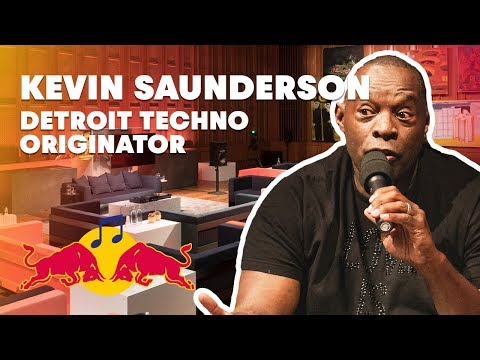
On the topic of techno, especially “real” minimal techno from Detroit/German ancestry, keep in mind how a lot of it was produced... It was performed mostly...Then recorded and edited. Thus I’ve come to the conclusion that right behind sound design in terms of importance is the ability to control everything hands on as much as possible to get the variations, the little cool bits that you could never have planned, etc.
And the most important hands on thing is the mix. I’d take shit sounds mixed well over amazing sounds mixed like shit. Techno is ALL about the groove... the groove is techno != swing setting... The groove comes from the interplay of frequencies. Why do you think you can’t listen to Richie give an interview and not talk about frequencies? The best way to find these grooves is to hands on mix levels. It’s insane how much the groove can change with a .5dB level,adjustment. Also, compression. Heavy, colored, playable compression is where you really start finding the groove.
Watch this
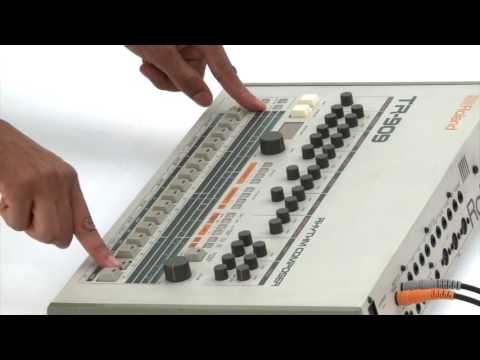
And of course this (which supports the idea it’s all about hands on control)
Just the $.02 from an initiate techno monk. 😏
@MonkeyDrummer : that Jeff Mills performance. Wow! Those are some serious chops.
Definitely nails it for the minimal aspect. Amazing what you can do with just a 909.
When the TR-8S came out, Roland posted a bunch of videos of different artists doing live performances with just that piece of gear. One of my faves here:
And for more inspiration I love this Bodzin Boiler Room set:
I don't think there's a formula but as an thought experiment maybe consider how those records were made (minimal number of machines with minimal capabilities recorded onto a minimal number of tracks). No doubt, part of that experiment would require the "and get to know those machines really really really well" bit which can be hard in our world of gajillions of apps that each do gajillions of things.
Then, because things are actually minimal (genre's aside), you gotta play what you have to make variations, progressions, etc.
imsofo (in my super obvious fanboi opinion), NS is perfect for minimal techno/house. The challenge might be that NS allows you to do too much.
Minimal gear inspiration and a demo of how a lot of it was made. Definitely requires interacting with the machines.
On the "couple of old dudes who never really made minimal techno but knew how to make tunes and use tons of gear to do it while keeping it minimal who then decide to make a minimal techno record together" tip, I really love the VCMG collab from a few years ago.
I'm by no means good at producing after 5 years of working on it but one thing that really helped me in this sense was buying a few cheap used Korga Volcas and making tracks with those. Minimal in sounds each one can produce. I had Beats for "beats", bass for bass/leads which is monophonic and Keys which is kind of polyphonic but not a full blown poly synth. It was limiting by built in sequencers as well. It made me think about how to do more with less and choosing good sounds since you can't layer a bunch of kicks or synth lines on top of each other.
You can obviously take this same mindset on the iPad but as you point out it can be challenging when you have a DAW that lets you throw a lot of instruments into a track and you have tons of different au instruments and effects acquired over the years like many of us do.
I've deleted most of the apps I have for now and try to produce just using a few favorites which is basically the Brambos suite and some audio damage effects
Okay, so I decided to get Groove Rider GR-16. I already had a play around with it, and my mind is definitely blown. I can set the number of steps in a pattern per part! This means I can create evolving patterns perfect for minimal techno. Got to figure out the automation next, but looks like automation can be done per pattern but also song automation that can be recorded live.
I love the fact I can import any sample from AudioShare directly into a pad without it having to be stored in the user samples section. Looks like I have everything I need to get started on this journey. Still gotta wrap my head around GR-16 some more with some more mucking about, but I love how it works thus far.
Dig into the step trigger conditions in the sequencer that somebody mentioned earlier in this thread. It's a powerful option to add some variety into patterns
Make sure you check out the trig conditions as you delve deeper. Even a stripped down one bar loop can maintain interest when you get the hang of them.
Happy to answer any questions as you go. Have fun.
By the way if you like Bodzin’s later melodic style check out Production Music Live’s excellent tutorials. (Actually they cover a lot of styles that might interest you) They’re for ableton but you sound like you know enough to port the ideas to your iOS DAW of choice. Quite a few lessons are available free on YouTube too.
Thanks for the tip. Definitely gotta check that out. I'm still first digging into this to learn everything without having to restore to a manual. I seem to learn better hands on, lol.
What will eventually blow your mind is when you reasoned you can, in the app, render a pattern into a track... expanding on that... you can end up with each track as it’s own “clip” and use GR16 almost like the launchpad app, if you follow me... I.e. track samples don’t have to be one-shots. They can be clips.
Okay, that is seriously amazing. Kinda gettin a live performance thing going.
Thanks! That was really good.
This is great! 👏
This is how I sequence about half the time. It is incredibly fun. The JX-3P has the same sequencer. You can evolve the pattern by having your number of triggers and number of sequencer steps be different.
On the ipad you can do this with the first Mozaic script I released, Infinity.
https://patchstorage.com/infinity/
Nice! I do this with the BeatStepPro and my SH-101. Instead of using one of the CV sequencers to sequence the SH, I program the sequence inside of the SH-101's sequencer and then use one of the BSP's drum channels to mess with the trigger times. Feels infinite.
You can also do this in Quantum (one sequencer triggers one or more other sequencers) but it's a little tricky to set up.
@jwmmakerofmusic
ha i did know you will ask about minimal, that's why i created those 3 patches.
Just hit the key and tweak macro knobs, weeeej