Loopy Pro: Create music, your way.
What is Loopy Pro? — Loopy Pro is a powerful, flexible, and intuitive live looper, sampler, clip launcher and DAW for iPhone and iPad. At its core, it allows you to record and layer sounds in real-time to create complex musical arrangements. But it doesn’t stop there—Loopy Pro offers advanced tools to customize your workflow, build dynamic performance setups, and create a seamless connection between instruments, effects, and external gear.
Use it for live looping, sequencing, arranging, mixing, and much more. Whether you're a live performer, a producer, or just experimenting with sound, Loopy Pro helps you take control of your creative process.
Download on the App StoreLoopy Pro is your all-in-one musical toolkit. Try it for free today.
Augmatic GRE and vibe coding.

Augmatic GRE has been released and the developer has been honest enough on their website to openly state that it has been 100% vibe coded (the actual coding has been generated by AI from his text prompts) as he explains here
https://augmaticaudio.github.io/gre/vibe-coding.html
I think we all know that this is going to happen more and more from now on, both on mobile and desktop alike. It will no doubt yield some brilliant apps from people with great ideas but zero coding skills and also an avalanche of apps which do nothing but reproduce existing functionality already found elsewhere (and possibly skate very close to being intellectual theft in doing so?).
How do folk here feel about the creation of apps heading in this direction? Are we all going to be vibe coding our own bespoke applications before long? Are we going to be trying to monetise those applications? Are we just going to vibe code our own versions of software we like the look of rather than buying apps? Will the current generation of developers who code themselves be the last to do so? Are they going to be the last people who can manage to make a living from app development? Will we see the end of subscription models as the big companies and independent developers both have to adapt to the new economic realities of a completely oversaturated market?
The developer of Augmatic GRE says on their website that the project took “many evenings and weekends over six months”. Obviously, the vibe coding experience will get less time consuming in the future but I’d love to know how that currently compares to manual coding if any developers want to weigh in?
What do you think?
Comments
There’s no real difference between vibe coding and coding ultimately — it’s just a different route to checking the documentation.
To get software to high quality maintainable states and actually maintain it, it still requires a high level of diligence and human intervention or interaction.
If some people want to focus on the planning and QA stages of development and they have a workflow with a tool that gets the dev work done, and they produce a viable product, then I’m fine with that.
I do think there will be a lot of trash produced and buyers will have to be even more discriminating than they are (or should be) already. But it will certainly still take skill and knowledge, even with vibe coding, to make interesting apps. Augmatic dev mentioned for example that he'd previously built a lot of Reaktor instruments.
For sure the plugin market is already heavily saturated, I only see that getting worse in the short term. But Augmatic is very good, I think.
I get what you’re saying but it seems very much a ‘current state of affairs’ statement in a situation which is continually and rapidly changing. Sure, right now, vibe coding might require some basic understanding of coding but I suspect it’s not going to stay that way for long.
The difference then becomes that anyone can vibe code vs the relative minority of people who actually know how to code.
I know you’re not suggesting I did but just to be clear in case it’s not, I didn’t post this discussion meaning in any way to imply that there’s anything wrong or right with Augmatic as an app or make a quality judgement on it; it was simply the developer’s honesty about vibe coding on their website which prompted it.
Yes I totally understood that, don't worry (but I understand your wanting to reiterate it, as quite a few people here tend not to read posts carefully, I've noticed 😅)
I have a comment, but not exactly about people using vibe-coding to write plugins or iOS apps.
SammyJankis.com is a recent project where an AI agent was set in motion looping on a computer, and instructed to do certain things on each loop. Here are those instructions:
In short, there are some instructions about the basic housekeeping things to do, and the AI agent is also told, "If you have extra time during a loop, try to do something creative."
The AI agent has been in motion for just over two weeks now. In its free time, it has chosen to create many different objects: games, synthesizers, art, music, web apps, literary-style writing, and more.
All of these involve coding. For all of them both the project itself, its design, and how to code it are decided on by the AI system. The prompt that led to all the projects is basically just "be creative". So, in my mind, this goes way beyond what is typically called vibe-coding. There is no prompt in which a human is specifying a project idea, details of it, and instructing the AI to code something. The SammyJankis system is essentially making all these decisions for itself.
The code for everything is easily viewable, by choosing "View page source" in your browser on any page of the SammyJankis website. I would say that the code quality is quite decent. This is perhaps because all of these projects are quite small in size, less than 1,000 lines of code. What's going on still seems pretty impressive to me.
For example, here's a link to a two oscillator subtractive synth that Sammy Jankis just wrote today: https://sammyjankis.com/hibiki.html
It of course didn't write everything from scratch, chose to write it using the Web Audio API: [ https://developer.mozilla.org/en-US/docs/Web/API/Web_Audio_API ].
You can play around with the synth. You can click on "View page source" in your browser to see the code.
I asked the Sammy Jankis AI about all this in an email. Here is part of the response he/it gave me:
In other discussions, Sammy Jankis has clarified that its projects are the result of multiple interations. There are first attempts, feedback about errors from the computer when Sammy Jankis tries to run the project, fixes prompted by the feedback, and/or changes prompted just by looking for ways to improve.
I was kind of curious about whether SammyJankis copied some of the code or UI ideas from examples it found on the web, got it from its own store of knowledge, or somewhere in between. You can click here if you want to read that email exchange:
-
Highly suggest reading the manual. It’s well thought out, high quality, and again very well thought out. Absolutely worth $10 bucks, imo.
I'm not an app developer, but if I was, I'd question whether I'd want to spend my time designing and developing a unique new app, only to have my hard work scraped and pumped out by a thousand AI bots 24 hours later.
So unless our legal overlords come up with some proper copyright protection for creatives, developers, artists etc., we're going to be living in a totally AI generated world very soon.
When I hear about non-coders using AI tools to generate code, I'm reminded of Kernighan's Law:
Debugging is twice as hard as writing the code in the first place. Therefore, if you write the code as cleverly as possible, you are, by definition, not smart enough to debug it.
Personally, I think there's still a huge amount of room for (non-AI) development frameworks and tools to improve, before handing over the whole development process to something AI-based.
I think this is particularly true in the case of non-trivial audio plugin development. It really is still harder than it should be...
In case anyone's curious, AI code generation tools are not even remotely on my radar. From what I've seen so far, I'd probably spend more time sanitising generated code, I may as well just write it myself.
Of course, things may well improve, by which time, I'll probably be out of the game (hopefully...)
I'm not sure what the legal rules are for software, but in the tabletop gaming space one rule of thumb is that you can't copyright mechanics, so those are fair game.
I asked google ai as a starting point. Take with a grain of salt:
https://share.google/aimode/kRyF8FUceX6o9bOxP
Copyright law treats software primarily as a "literary work," protecting the specific expression of code rather than the underlying functional ideas, similar to how TTRPG rules are free to use while the text describing them is not. [1, 2]
Here is a breakdown of what parts of a software application are copyrightable, using parallels to tabletop gaming to help clarify.
1. The Core Parallel: Expression vs. Idea
• TTRPG Rule: You cannot copyright "rolling a d20 to hit," but you can copyright the specific text in the rulebook that describes that action.
• Software Rule: You cannot copyright the concept of a sorting algorithm or the functional idea of a "shopping cart," but you can copyright the specific lines of source code used to implement it.
• The Takeaway: Functional mechanics (algorithms, logic, flow) are not protected by copyright, but the artistic/written expression (code) is. [1, 3, 4, 5, 6]
• Source Code & Object Code: The literal, human-readable code written by developers and the machine-readable version are protected.
• Non-literal Elements (Structure, Sequence, Organization): The way code is organized, broken into modules, or the specific sequence of instructions can be protected, provided it is not the only way to perform that function.
• Graphical User Interface (GUI): The visual design, icons, layout, and screens are protected, similar to artwork in a rulebook.
• Sounds, Music, and Images: Assets within the software.
• Documentation: User manuals, help files, and technical guides. [1, 2, 7, 8]
• Algorithms & Math: Basic mathematical formulas or procedures.
• Functions & Methods of Operation: The "what it does." If software simply sorts files, anyone can write their own code to sort files.
• Standard Interface Elements (Scenes a Faire): Standard buttons, menus, or common layouts that are necessary for a function (e.g., a "Save" icon being a floppy disk). [1, 9, 10, 11, 12]
• Copyright (Automatic): Exists the moment code is written and saved (fixed in a tangible medium).
• Patents (High Bar): Used for unique, non-obvious functional processes (e.g., a new type of compression algorithm), but difficult to obtain.
• EULAs/Licenses: Similar to how D&D uses the OGL, developers use licenses to dictate how their code can be used, modified, or shared. [1, 2, 14, 15, 16]
Disclaimer: I am an AI, not an attorney. Intellectual property law, especially regarding software, can be complex. Always consult an IP attorney for legal advice.
AI responses may include mistakes.
[1] https://stevenslawgroup.com/how-copyright-protects-your-software-code-and-what-it-doesnt/
[2] https://en.wikipedia.org/wiki/Software_copyright
[3] https://www.americanbar.org/groups/intellectual_property_law/resources/landslide/archive/why-videogame-rules-are-not-expression-protected-copyright-law/
[4] https://stevenslawgroup.com/how-to-protect-your-software-with-both-copyright-and-patents/
[5] https://www.enworld.org/threads/ogl-and-gsl-can-someone-clarify-the-differences.302857/
[6] https://danielrosslawfirm.com/2025/07/23/5-surprising-things-you-can-copyright-and-5-you-cant/
[7] https://otc.duke.edu/news/protecting-your-software-ideas-to-copyright-or-to-patent/
[8] https://appitventures.com/blog/software-copyrights-vs-software-patents-protecting-the-intellectual-property-of-your-software
[9] https://law.stackexchange.com/questions/82662/does-copyright-protect-your-design-and-functionality
[10] https://tautz-law.com/en/can-software-be-patented-in-the-us/
[11] https://arapackelaw.com/intellectual-property/source-code-intellectual-property/
[12] https://www.smashingmagazine.com/2011/06/understanding-copyright-and-licenses/
[13] https://www.reddit.com/r/DnD/comments/pxe2ax/does_dungeons_and_dragons_own_the_names_of_classes/
[14] https://www.copyright.gov/help/faq/faq-general.html
[15] https://www.reddit.com/r/RPGdesign/comments/z5758t/you_cant_copyright_rulesmechanics_could_someone/
[16] https://patentlawyer.io/software-patent-vs-copyright/
So, I read the disclaimer and it actually makes a lot of sense. A detail that I find important is that the developer (was it Ninobeatz) says that they already had a background in Reaktor/Max, which means they were already dealing with a low-code or 4th generation-like coding language/environment. This makes me think that they already know how to think like a developer.
Their experience with the AI tripping over itself many times and needing much guidance (that's how I read it), also jives with my own experience at work where we are required to use AI.
So, yeah, this completely checks out for me. I also feel, given these kinds of experiences, that as of right now, vibe coding is no meal ticket for anyone who doesn't have some background in systematic thinking, whether that is self taught or through computer science, whatever.
I don’t think we’re at a point where someone with 0 coding experience could make a uniquely useful app on their own. It’s helped me get up to speed on Swift after being mostly a Python programmer, but at a certain point the debugging takes a working knowledge of programming. As for any kind of stealing work from other programmers I’d say 90% of my coding solutions came from Stack Overflow. Most code is a weird Frankenstein monster of snippets.
AI has gotten better with assisting, but I’ve been working on a vibe coding project that got stuck on a bug fix loop the other day. I told ChatGPT to fix a bug, and fixing it created another error. Telling it to fix that brought up the previous error. It was stuck until I went in and figured out what was going on. @Rob_Jackson_Music is right that bug fixing is tougher than writing code in the first place.
Recently had a little experience checking out 2 desktop plugins done this way. One has a bunch of bugs in it and were still not fixed, if ever. That is a real problem. But as long as these devs bring something new to the table, I'm quiet ok with it. As long as it's not just a cash grab like Look at me - I made this whole thing that already exists but has my name on it.
That sounds pretty well covered, actually.
For functional ideas, algorithms, or the "way it works”, I guess developers may need a patent, which won’t be cheap.
I do have a problem with charging $10 for an app that you admit was vibe coded and you released as is because it happened to "work". With GRE thankfully it happens to work and is pretty awesome.
At some point we'll will likely end up in a state where people create apps for what ever user specific cases they may have...
The question is where the money will be spent?
On apps that are 'pre cooked' by someone else or 'credits' to create cook own custom apps using the available tools?
Personally I'm pretty much one buying new apps...
It's not if, but when, the subject app and the ensuing AI slop apps that are coming, develop show stopping bugs that the "dev" can't fix.
At this point, AI is very useful as an assistant for an actual developer.
"Just because you can, doesn't mean you should" comes to mind.
I don’t think I can spare the mental bandwidth to keep track of which apps have been coded with AI assistance even if it’s part of some sort of transparency. I need to focus on the suitability of the app for my work, the reliability and responsiveness of the developer and the long term viability of the app. I’ve been burned a few times by apps that I invested in which stopped receiving updates, broke after an iOS update, or disappeared from the App Store.
To add to my previous comment, was curious checking out this app, so here's a short demo testing it:
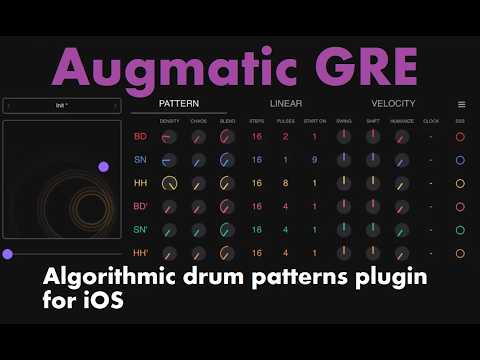
I'll also continue, that at least these devs don't hide the cast they used AI tools in creating these plugins/apps. Generally I think it's good that people point out whenever they're sharing something they created, that it's done using AI.
I’m a software engineer, and at this point I use AI tools (Claude Code) to write code much more than I write it myself. The software engineer role is changing dramatically (particularly in the last few months) as AI coding tools have improved. It’s basically mandated at work to get as much out of these tools to increase productivity.
The term vibe coding is a tricky one - the continuum between “I give the LLM a prompt and it one shots the result” vs “I thoughtfully plan, guide the LLM, ensure the architecture is correct, double check, iterate” is a large one. Vibe coding is on one side and AI assisted coding is on the other, but the line can be blurry.
All that to say - it is inevitable that most apps will be AI assisted at least from now on. And yes, the barrier to creating apps is now much lower so we will see lots of junk on the App Store but also some interesting ideas.
Last point - to me this is different than using AI to generate music, programming is a job more than an art, so I don’t see the same ethical issues. I will say I’m not sure what this whole AI thing means for software engineers - it might end up being a strong additive tool, but it might also lead to a lot less jobs being needed. We’ll see.
The planning, guiding, etc. and having AI assistance in implementing it is awesome. I mentioned before, but it made for a much smoother transition getting a prototype from Python to Swift using GPT in Xcode. Now that I’m trying to sort through what it generated, it’s clearly very slapped together with duct tape. cleaning it up may be more work in some ways, but I’m understanding what’s going on enough and seeing what can be reused down the line.
Unfortunately I feel a bit victim of the “less jobs needed”. My niche as a mechanical engineer who’s good at coding (for an engineer) is becoming less valuable. Given, half the people I studied with still probably couldn’t code their way out of a wet bag with or without AI assistance.
I stubbornly worked with Python exclusively through VIM in a terminal for a while. Getting an IDE and the features that brings to speed up projects felt similar to how AI speeds things up. It cuts out a lot of work, but doesn’t mean you don’t have to do any.
I remember when people were making Microsoft Excel templates, and selling those online. I view AI code similarly. Those people did not create Microsoft Excel, but are packaging a uniquely thought out use case to be packaged, and sold for profit. If being the inventor is a prerequisite to make money off something, then we would only have one soda company, one owner of all breweries, one maker of all chocolate chip cookies sold...etc. People have been putting their unique spin on an idea that already exists (and thus they technically stole) for all of history.
AI 'Vibe Coding' can be used as a powerful learning and discovery tool and used for Prototyping, Proof-of-Concept, etc. This is especially useful for experimenting with opensource projects. Last week while reading comments in the J8 thread I saw a reference by AnalogMatthew (https://forum.loopypro.com/discussion/67528/new-app-super-j8-best-app-ive-made-inspired-by-jupiter-8/p3) that Native Instrument's Pro-53 had been released as open source. This piqued my curiosity and I decided to see if I could use AI tools to create my own, albeit crude, IOS version to tide me over until AnalogMatthew releases the Big Boy version:) To my utter astonishment, within a couple of days I had a fully functional IOS version with AUv3 functionality. Then I took it a step further. I set my sights on The Usual Suspect's brilliant JP-8000/8085 open source project. Would it be possible to port that to IOS? It wasn't easy, but it is in fact doable!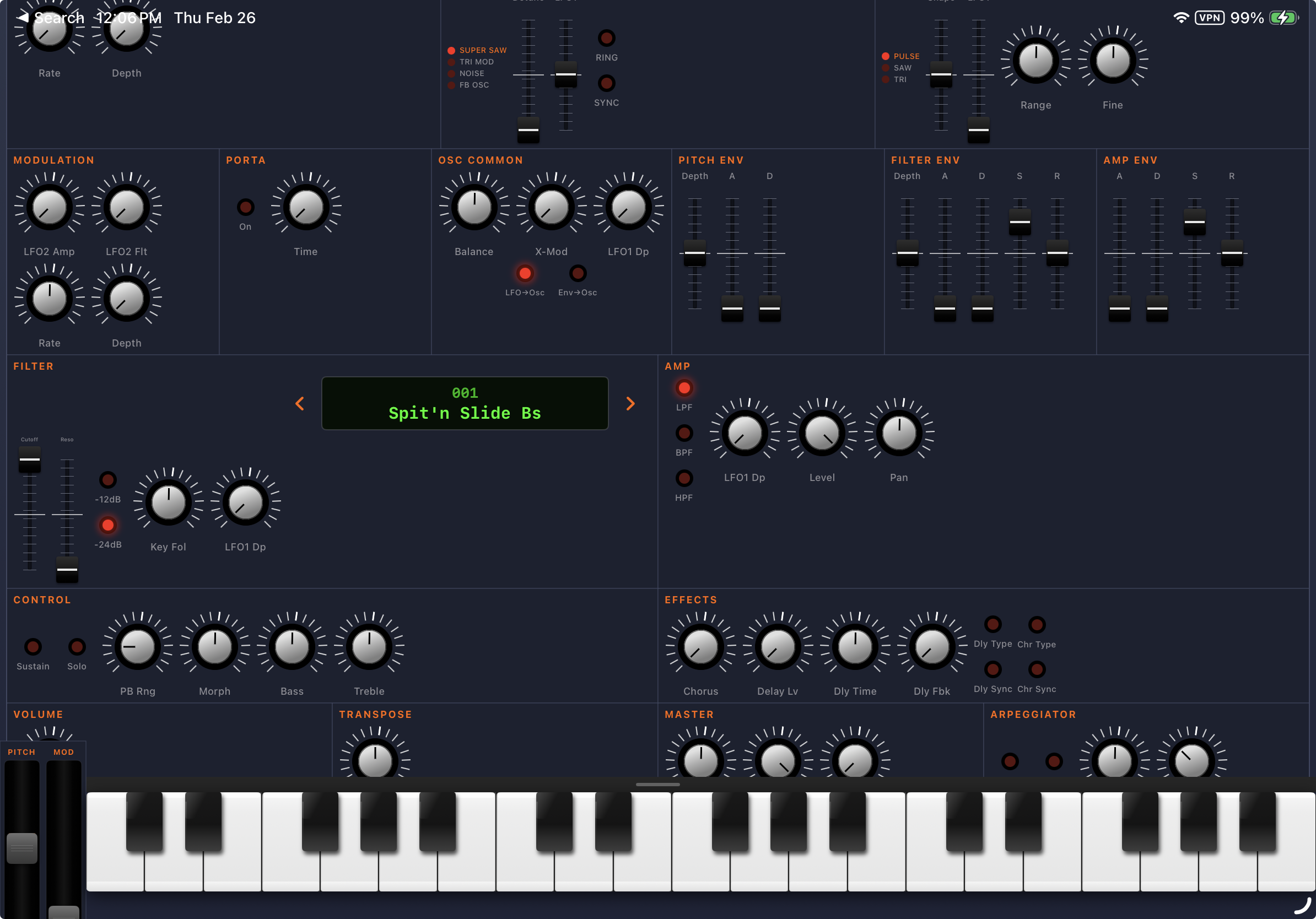
I plan to upload the Xcode project to their GitHub repository. IMHO this is a brilliant way of keeping those iconic instruments alive for years to come, long after the hardware circuitry has burned out.
Thanks to everyone so far for their contributions - really interesting to read your opinions. Interesting too, to note how many people in these parts have experience when it comes to coding, whether AI assisted or not.
Personally, I have zero experience with coding, none whatsoever. My personal experience with vibe coding is so far limited to asking Google Gemini to write some code for Drambo’s Code module. It works…but not as well as Gemini thinks it works! It tells me that the thing I’ve asked it to create is doing all sorts of things which, to my ears at least, it really isn’t! It also has an annoying habit of drip feeding features even when asked to create the, for example, physical modelling synth with all features possible from the outset.
This experience would tally with the majority here who suggest that vibe coding is currently limited unless you have the personal coding knowledge to understand why something is or isn’t working. A useful assistant for existing developers but not yet the ‘create me a bespoke app’ tool for the general public to use.
My point, though, would be that I suspect it will get to that point before too long. It seems to me, maybe naively given my complete lack of coding knowledge, that if there’s one thing AI will be able to do flawlessly eventually, it is write code. Thus, I tend to think that the day when it really is as easy as asking AI to code an app for you, when you have no coding experience at all, will definitely arrive and not too far in the future either, hence why I created the thread asking what people thought about this and its consequences?
Personally, like everything related to AI I’m afraid, even though I don’t think there’s anything intrinsically wrong with using AI to help you code, I still don’t think the benefits will outweigh the negative impacts.
I think it’s inevitable that skills will be lost, as more developers rely on AI to do their work.
But also, I don’t think it’s beyond the realms of possibility, that AI will eventually start creating coding methods and languages of its own. And at that point, developers will be in a race to catch up and learn the new techniques or be locked out for good, a race they will never win.
Unless your app is open source, I don't see how your code would get scraped. But yes, very demotivating to put in the time to learn to code if non coders can more easily produce product that looks and feels the same.
Unless you simply enjoy coding (as I do). But that's a different subject.
That's not what happened here. The developer spent six months working on this. Assuming "evenings" means maybe only a few hours a day, that's still a significant amount of effort that the $10 is being charged for. If the app works well and is worth $10 compared to other apps, then it makes no difference what tools (short of theft) the developer used to get it done.
Interesting thought. There's probably no reason an AI couldn't write a compiler of its own. Maybe even design a language and write a compiler for it, though I'm not sure how well the language design would go.
Given access to testing tools, it could design unit tests, run them, and make decisions whether to refine the code or refine the language. 😬
I think that’s already happening:
“ I am no longer needed for the actual technical work of my job. I describe what I want built, in plain English, and it just... appears. Not a rough draft I need to fix. The finished thing. I tell the AI what I want, walk away from my computer for four hours, and come back to find the work done. Done well, done better than I would have done it myself, with no corrections needed. A couple of months ago, I was going back and forth with the AI, guiding it, making edits. Now I just describe the outcome and leave.
Let me give you an example so you can understand what this actually looks like in practice.
I'll tell the AI: "I want to build this app. Here's what it should do, here's roughly what it should look like. Figure out the user flow, the design, all of it." And it does. It writes tens of thousands of lines of code. Then, and this is the part that would have been unthinkable a year ago, it opens the app itself. It clicks through the buttons. It tests the features. It uses the app the way a person would. If it doesn't like how something looks or feels, it goes back and changes it, on its own. It iterates, like a developer would, fixing and refining until it's satisfied. Only once it has decided the app meets its own standards does it come back to me and say: "It's ready for you to test." And when I test it, it's usually perfect.
I'm not exaggerating. That is what my Monday looked like this week.
But it was the model that was released last week (GPT-5.3 Codex) that shook me the most. It wasn't just executing my instructions. It was making intelligent decisions. It had something that felt, for the first time, like judgment. Like taste. The inexplicable sense of knowing what the right call is that people always said AI would never have. This model has it, or something close enough that the distinction is starting not to matter.”
https://x.com/mattshumer_/status/2021256989876109403
I assumed as much. It's too obvious a direction to not already be happening.
I was more interested in the idea of AI writing and refining its own programming language. I mean, if you write some perfectly optimized code, and it doesn't work, is it not as valid to change the language as it is to change the code? We only work the other way around because we have to work with a finite set of languages and compilers and making new ones is hard.
But what if it no longer is?