Loopy Pro: Create music, your way.

What is Loopy Pro?Loopy Pro is a powerful, flexible, and intuitive live looper, sampler, clip launcher and DAW for iPhone and iPad. At its core, it allows you to record and layer sounds in real-time to create complex musical arrangements. But it doesn’t stop there—Loopy Pro offers advanced tools to customize your workflow, build dynamic performance setups, and create a seamless connection between instruments, effects, and external gear.

Use it for live looping, sequencing, arranging, mixing, and much more. Whether you're a live performer, a producer, or just experimenting with sound, Loopy Pro helps you take control of your creative process.

Download on the App Store

Loopy Pro is your all-in-one musical toolkit. Try it for free today.

Audio interface vs mixing console if I need more audio inputs

edited March 2025 in Hardware

I bought a Novation Summit polysynth recently. Since this is my second hardware synth (and I might get a drum machine as well in the future), I need more audio inputs to my ipad as my current audio interface (steinberg UR22) has only 1 stereo input.
I’m pondering how to upgrade:
a) Shall I buy a new audio interface with 3 stereo inputs?
b) Or buy a mixing console and connect the hardware synths to the existing audio interface through the mixing console?
c) or get a mixing console with built-in audio interface?

I would appreciate your thoughts.

The main use case is to record my own music into Cubasis and Logic pro

Comments

  • If you're comfortable working in software for controlling your "mixer" there's no need for a hardware mixer at this point. That calculation changes if you plan to do a bunch more hardware routing stuff that might benefit from things like aux sends.

    It's always a good idea to have more channels than you think you need.

  • @suboptimal said:
    If you're comfortable working in software for controlling your "mixer" there's no need for a hardware mixer at this point. That calculation changes if you plan to do a bunch more hardware routing stuff that might benefit from things like aux sends.

    It's always a good idea to have more channels than you think you need.

    The main idea behind the hw mixer is simply to have more audio inputs for the hardware and connect the mixer’s output to the existing audio interface’s input. Whithout the mixer I need a new audio interface with 3 stereo inputs.

  • @GLacey said:

    @suboptimal said:
    If you're comfortable working in software for controlling your "mixer" there's no need for a hardware mixer at this point. That calculation changes if you plan to do a bunch more hardware routing stuff that might benefit from things like aux sends.

    It's always a good idea to have more channels than you think you need.

    The main idea behind the hw mixer is simply to have more audio inputs for the hardware and connect the mixer’s output to the existing audio interface’s input. Whithout the mixer I need a new audio interface with 3 stereo inputs.

    Gotta scale up. Audio interface is the way

  • edited March 2025

    I’m facing a similar situation… currently using a Roland Duo-Capture which is only 2 inputs.
    (and also locked at 44k while standalone my iPad is locked at 48k) :s

    As others have said I think a new audio interface is the way to go, although the idea of a mixer with an integrated audio interface has always interested me.

    My preference would be for something that has at least 8 inputs at a minimum 24/96 resolution and a MIDI port.
    ADAT in/out is also nice to have if you need to expand further in the future.

    FWIW I considered getting something like this as a cheap and cheerful way to monitor a few more sources…
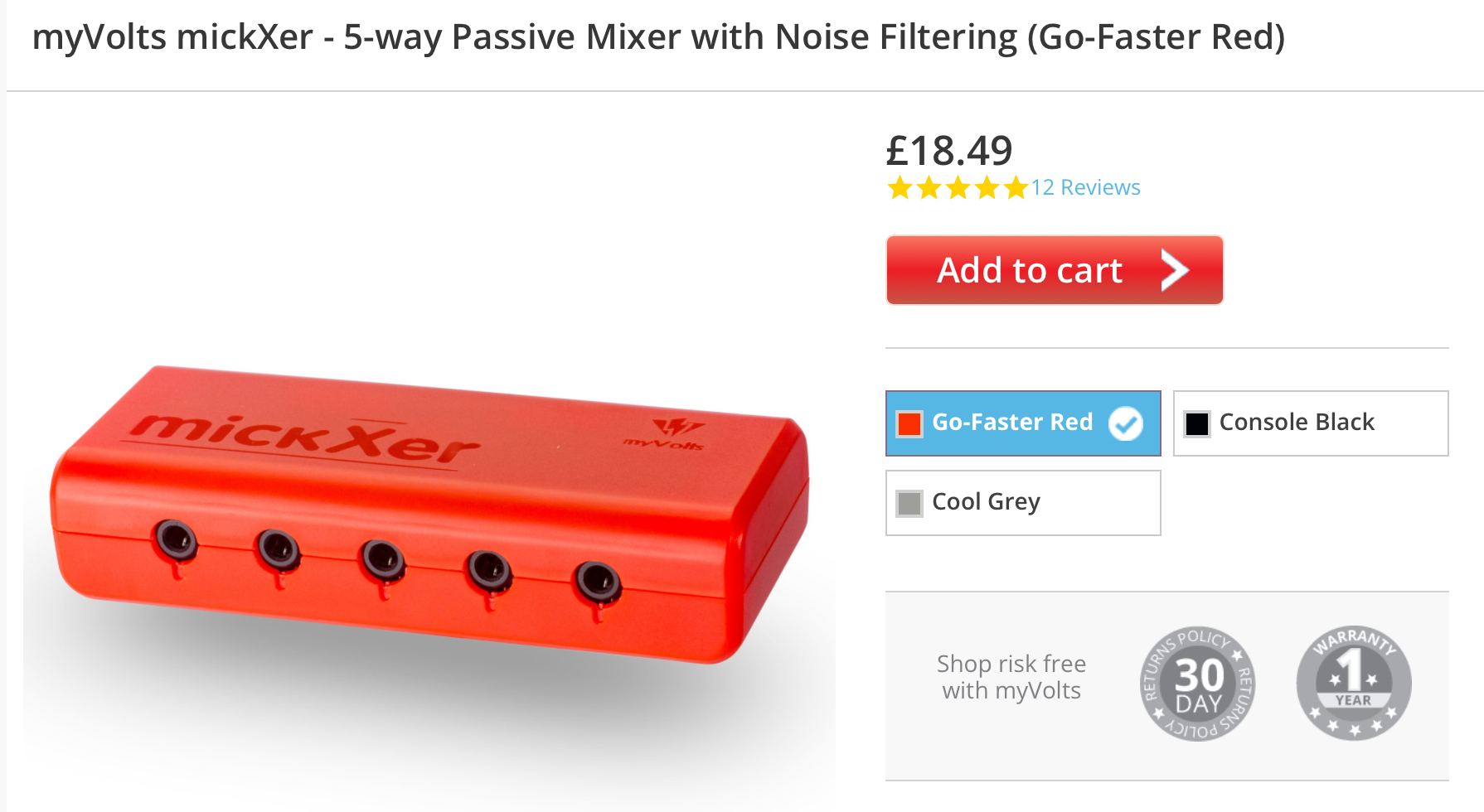
    Ideally I’d like an RME interface but the passive mixer is more in my price range atm. :p

  • I bet the Summit is lush!

  • My preference would be for something that has at least 8 inputs at a minimum 24/96 resolution and a MIDI port.
    ADAT in/out is also nice to have if you need to expand further in the future.

    I’m also considering an audio interface with as many inputs as possible, for example Behringer UMC1820, which has 8 inputs at an affordable price (maybe too cheap to be good). The other option is the Motu M6 which costs 50% more, but has 3 inputs only.

  • @iamspoon said:
    I bet the Summit is lush!

    It is :smile:
    I fell in love with it.

  • The biiiiiiig question what kind audio interface is the best choice :)
    I have used a lot of them, so here are my take aways:

    • Only 3 companies provide a proper control App (IOS) for the interfaces (Steinberg, RME, MOTU), so if you would like to control your interface via an APP (like me, e.g. creating different headphone mixes) than you should consider an interface of one of these companies (cheaper Steinberg (e.g. UR44C), mid range price (Motu, e.g. ultralite mk5 ), high priced RME (e.g. UCX II)
    • More inputs and outputs is always better to be safe for future growth, consider ADAT to be present if you maybe want to add more mic pre amps or general more inputs. 6-8 inputs without ADAT extension should be a must, if you would like to be on the safe side
    • audio quality is very good also in the low end (cheaper) segment, if you really need 192khz sampling rate? My thought on that: NOT AT ALL!
    • Consider the space you have in your (home) studio
    • you can use a good audio interface for many years (if the interface is able to grow with your demands), so in my opinion it is worth to spend a little more money for an interface instead of buying a new one every 2 years (which i did :-))

    My actual setup is a Motu ultralite MK5 (bought used, 6 LINE IN plus 2 Mic Pre amps ) with a Motu 8pre ADAT extension (bought also used and cheap) . The IOS Software to control the interface (without handling knobs) -> CUEMIX 5 is good, not perfect but good.

    Just my thoughts :-)

  • @Famihix said:
    The biiiiiiig question what kind audio interface is the best choice :)
    I have used a lot of them, so here are my take aways:

    • Only 3 companies provide a proper control App (IOS) for the interfaces (Steinberg, RME, MOTU), so if you would like to control your interface via an APP (like me, e.g. creating different headphone mixes) than you should consider an interface of one of these companies (cheaper Steinberg (e.g. UR44C), mid range price (Motu, e.g. ultralite mk5 ), high priced RME (e.g. UCX II)
    • More inputs and outputs is always better to be safe for future growth, consider ADAT to be present if you maybe want to add more mic pre amps or general more inputs. 6-8 inputs without ADAT extension should be a must, if you would like to be on the safe side
    • audio quality is very good also in the low end (cheaper) segment, if you really need 192khz sampling rate? My thought on that: NOT AT ALL!
    • Consider the space you have in your (home) studio
    • you can use a good audio interface for many years (if the interface is able to grow with your demands), so in my opinion it is worth to spend a little more money for an interface instead of buying a new one every 2 years (which i did :-))

    My actual setup is a Motu ultralite MK5 (bought used, 6 LINE IN plus 2 Mic Pre amps ) with a Motu 8pre ADAT extension (bought also used and cheap) . The IOS Software to control the interface (without handling knobs) -> CUEMIX 5 is good, not perfect but good.

    Just my thoughts :-)

    Thanks for the tips!
    I checked this Motu ultralight mk5 on youtube. Very impressive device! However it would be an overkill for me. I think a Motu M6 would fulfill all my needs, however it’s tempting to get the Behringer with 8 inputs.
    As to the sample rate, I never go beyond 48kHz :)

Sign In or Register to comment.