Loopy Pro: Create music, your way.
What is Loopy Pro? — Loopy Pro is a powerful, flexible, and intuitive live looper, sampler, clip launcher and DAW for iPhone and iPad. At its core, it allows you to record and layer sounds in real-time to create complex musical arrangements. But it doesn’t stop there—Loopy Pro offers advanced tools to customize your workflow, build dynamic performance setups, and create a seamless connection between instruments, effects, and external gear.
Use it for live looping, sequencing, arranging, mixing, and much more. Whether you're a live performer, a producer, or just experimenting with sound, Loopy Pro helps you take control of your creative process.
Download on the App StoreLoopy Pro is your all-in-one musical toolkit. Try it for free today.
Hardware development w/ Raspberry Pi and Arduino?
Hey everyone... so... I'm a super new I guess wannabe developer and engineer asking some questions around the forums about iOS development and I've always been really interested in seeing if it's possible to use a Raspberry Pi and Arduino to create controllers and stuff. I'm really interested in this stuff and would love some info on what's possible in this area and to meet some people who too have the bug to create. Anyways, thanks in advance! Peace!
- MA
P.S. Here is a forum discussion I started on App Dev. earlier: https://forum.audiob.us/discussion/18162/app-development#latest, Thank guys!
Comments
I don't recall where I saw it, but someone was excited about getting wireless midi going with R.Pi
Check out Notes & Volts on Youtube: https://youtube.com/user/NotesAndVolts
WOW, That is really really cool.
Ohhhhh, thanks.. will do!
I haven't read over the whole thing yet but it looks like someone got a BeagleBone working through USB.. that's kind of what I'm after. Bluetooth is super interesting though.. "Hmmm, very interesting."
For controllers Arduino/teensy/PiZero should be the right choices, powerfull raspis/beaglebone and embed computers are cappable of much more like stompbox fx units.
https://ccrma.stanford.edu/~eberdahl/Satellite/
Also there are emerging standalone platforms like bela.io.
http://bela.io/
So it depends on how far you want to go (and how much dsp coding you know) but for regular midi controllers it's not necessary all the powerhouse of these embed platforms. ITOH arduino/teensy are c++ code based meanwhile Raspi runs an entirely linux distro on them.
I hope it helps.
I made a MidiBox with RaspberryPi in the past for my Behringer iStudio dock. The iStudio does not support connecting midi keys/pads thru usb , the USB post was for computer only .
So I used a raspberry to connect all my midi devices together via usb.
Recently Bluetooth midi was finally in Linux and I am going to test it (hopefully it will work on a raspberry)!
https://blog.felipetonello.com/2017/01/13/midi-over-bluetooth-low-energy-on-linux-finally-accepted/
Thanks Man! That helps a lot!
Wow, cool!
You are welcome... also I had drop a drive with years of resource in this field so if anyone is interested to be added just drop me a pm with gmail account.
https://drive.google.com/open?id=0B7FEmphzxtnxM1MxdmVOcDdScnc
Expect to see great things from traktion/waveform through 2017 in this arena. RPi prototypes put ios into perspective -especially on price/performance.
Found this: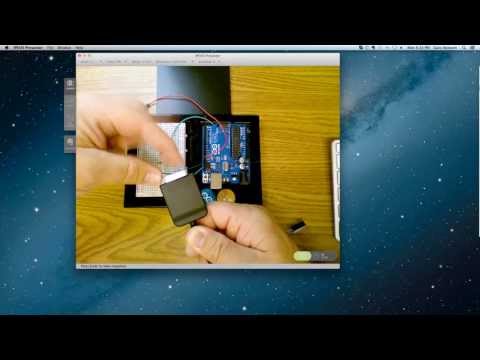
I guess you don't even need the RPi but it may still be of use, Idk yet. lol.
RPi's are really cool and useful. One IOS/Audio use i recently used one for is as a live TV/DVR IAA streaming sample source using the recently released strom app. I ran an audio connection from my DVR to a small USB audio adapter ($6 at Radio Shack), installed Darkice on the RPi, added the url to strom and viola', live sampling of the audio feed from any of my DVR video and music channels!
Cool!
With Arduino Leonardo (class compliant) you can code regular midi controllers in a breath. Don't look at 30pins technology (deprecated) because we have cck usb3 which is more or less the standard actual connection for audiovisual stuff (with the proper hub)
Thank you!
This looks kind of cool! https://store-usa.arduino.cc/products/e000058
There's also a vast ocean of these on ebay - 272297662375 - (and that price is based on ten of them!)
They're hugely popular because of the price. They're not ARM based (despite the description), it is a simple little modern 8-bit microcontroller cpu - this one and there's a lot of people hacking on them now.
Stm32 is another option but it's the first time I see them as arduino boards.
STM32 is an excellent option (and is ARM based) but can cost up to twice what an STM8 unit costs. You can buy one of those boards for 99p from those economy raping bastards that are china (ps thanks for the cheap stuff, china) but you can't get an STM32 board for less than about two quid.
Rechecking the link I saw st8. First time I see one of this (but makes sense). What I'm still figuring is about arduino compliance. Also for serious developers not the best option (arduino) but for hobbist market a must have.
Yeah I'm agreed about your point in scaled market no-sense. Anyways as hobbist my platform of choice is iOS (usually recycling old devices with old commercial stuff like ik irigs) since even he Raspi DAW didn't hype me against proper setted AUM with the right fx.
As old I get (I'm 37 in june) more lazy and focus I get putting in my top priority music composition not the diy tool crafting of the last eight years...
Ironically, one of the most powerful solutions would be to find an old netbook and take it apart. But you'd end up putting it back together as something resembling a netbook again.
I had wondered many times but lately I've trying to make work Serato on i3 with no luck and find myself feeling "I don't want to go back into x86" so standalone hardware should be my next station. I know most of these has the same guts but I don't want to deal with OSes anymore, includding macOS. I feel cheated about how powerless (and bang for buck) seem x86 against iOS. The drawbacks are less and less everyday and, as example, I'm recycling an old 4gen to become an standalone synth. That's what I call "one-task-machines" but of course with Alchemy, Loopy, etc...
I have a couple ardurinos I have no idea how to use and a orchard of raspberry Pi's that I play with.
I'd love to find a way to use them for video generation/synthesis - right now I run things like glitchNES and litewall on emulators for that purpose.
Anyone tried anything like that?
Been really enthusiastic about Raspberry Pi, over the past year and a half, including for music projects. The main integration with iOS, in my case, has so far been through OSC, but it’d be cool to use a Pi as a MIDI device for iOS ones. Been using MIDI devices with my Pi boards, but not in connection with my iPhone or iPad.
By the way, Sonic Pi (originally made for RasPi but available on other Linux distros, as well as on Windows and macOS) will soon support MIDI I/O.
It’s also great fun to play with Pure Data, ChucK, SuperCollider, and Processing on a Raspberry Pi 3.
Also, been planning some projects with the Axoloti system. Someone just lent me an Axoloti Core and, though it does have its own learning curve, it’s Pd- or Max-alike enough to make some sense from the get go.
Super cool!
@Enkerli check this out
https://github.com/jean-emmanuel/open-stage-control/releases
It's a web (not iOS) OSC surface application ,but you can control from iOS (and other devices) local USB midi devices. Haven't tried it on respberry, but it seems a great project
Demo page :
http://openstagecontrol.herokuapp.com/
Anyone have been successful on midi over bt with raspi3 and ios?
Can you explain a bit how you get osc between raspi on ios? Or if you have some resources for it. Just got me a raspi few days ago and been trying to figure it out. Im new to linux and coding in general(i do have friends who i have observed and who explained it some to me and who can help me with some stuff), so some beginner materials about something relating to this whole setting raspi up for music stuff are welcome as well if you know some.
Pure data in Raspi, touchOSC/lemur on ios.
About wifi just a dongle in the Raspi should work (and with OSC you don't need nothing more than a ip address to make it work)
The true questions are...
Which distro are you going to use?
It has pure data installed or do you have how to get it?
As resource (but just google raspi osc)