Loopy Pro: Create music, your way.
What is Loopy Pro? — Loopy Pro is a powerful, flexible, and intuitive live looper, sampler, clip launcher and DAW for iPhone and iPad. At its core, it allows you to record and layer sounds in real-time to create complex musical arrangements. But it doesn’t stop there—Loopy Pro offers advanced tools to customize your workflow, build dynamic performance setups, and create a seamless connection between instruments, effects, and external gear.
Use it for live looping, sequencing, arranging, mixing, and much more. Whether you're a live performer, a producer, or just experimenting with sound, Loopy Pro helps you take control of your creative process.
Download on the App StoreLoopy Pro is your all-in-one musical toolkit. Try it for free today.
Comments
Great memory for film, u042! I had forgotten about that image, but I do remember Clarke's writing about electronic note tablets in the quartet of Rama books he wrote with Gentry Lee. However, I was just trying to make a point. No one can get it all right all of the time, especially with predictions of the future.
Clarke published 2001 in 1968. 33 years later the real 2001 showed up. Was it anything like Clarke's vision? Hmmm. As I recall the only monolith was MacDonalds. Is he a genius? Absolutely. But unless you're a precog out of a Philip K. Dick novel you're not going to get it right anywhere near the reality.
Maybe better examples are Orwell's 1984 and Huxley's Brave New World. Separately one is a sublime caricature of the West and the other a savage reimagining of communist realities. 1984 was a fetal 1948 for Orwell.. Orwell's is gaunt and Huxley's is florid. But put them together and you have a damn good picture of today's reality in the good old USA and elsewhere.. Exponentially more frightening than either author conceived on his own. Fortunately we still have hope, something lost in those two epic novels. My opinion, of course.
Now what the heck has this to do with the future of iOS? I guess the ultimate answer for me is no one knows what the future will bring. However, all your comments have educated me and deepened my understanding of the current limitations of iOS, the possible workarounds, and that a desktop setup for me in the future might not be such a bad idea after all. That's a pretty good takeaway, not to mention the enjoyment of listening to stimulated minds.
Or maybe your reality simply diverged from that one at some point. Lotta weird reality anomalies back in the 60’s and 70’s.
I guess the Terminator changed the past, so we are in another timeline now

Feels more like the 1984 movie
Yes, no one knows of course. There are still these rumors that Apple might create their own chips for mac as well (but i guess that would be some years away).
I mean without iOS i wouldn´t maybe create music now since i started it just with an iPhone 4 and 2-3 apps.
Then i wanted more and felt more creative with mac and plug-ins. So it was a natural evolution for me.
For a time i thought iOS is THE future but that settled down since i realized it´s mainly the same just with another form of input and different GUI setup.
I think iOS gone far enough for a lot of great electronic stuff but the kind of large Kontakt libraries are far far away (if even possible in the next years).
I also saw that in general the prices are about the same in the sense of you get what you pay for.
Often i just wish i could run iOS on my mac and connect them via a thing like Audiobus.
When i started i was amazed because everything was new and shiny but then after some time iOS made it sometimes hard to get creative and limits me at the wrong things.
Now i just use mac and iOS together and use them for what they do best.
About 80% of the tools i love are just not available on iOS or even not possible. If that would be the case i would it use more maybe and would run out today and buy an iPad Pro.
In a lot forums people seems to focus too much on brands, companies, OS etc. while the "real" musicians just use whatever they get in their hands.
All this will evolve and i´m really interested in the next generation idevices and macbooks (i hope with 6-core i9 then). A thing i don´t like about iOS is the fast moving and things feels old very fast compared to the more settled down desktop world.
I do hope we see some of the really unique tools on iOS like Dust (a binaural granular synth/FX) and stuff like Kaleidoscope (from 2C audio).
IOS is great but i miss really more innovations now in terms of sound design, synthesis and creative FX.
There is still a lot going on in the desktop world i would really like to see on iOS as well. But it might be hard since these tools costs some and needed years or research and of course they are heavy on cpu mostly as well and even just run on multiple cores (not sure if that even is possible with iOS yet).
The great thing is wherever and with whatever you work , you will take that know how with you.
I really don´t care if i would use windows 10, iOS only or whatever new comes tomorrow if i´m happy with the results and makes me happy.
But i have the feeling that people always wait for the next new thing and forgot about the things we already have.
A dangerous thing on iOS is for me all these tiny nice apps which distract me often to learn something really and jump from one app to another. Then i think i would be better to buy 1-2 more expensive tools and try to master them really.
I was amazed by touch screens controls and while it can be still great it makes me a bit lazy and distract me from learning playing real keys. With all these different layout and GUI´s and on screen virtual keys it´s impossible to train your muscle memory really (for me at least).
I was searching for the one thing to do it all and now i realized that i might have already the perfect combination with using an iPhone, Macbook Pro and Seaboard Rise.
For some time i have the idea to build my own kind of chassis to create my personal dream machine.
Man needs a project for a life time
I've heard more excuses of why instruments shouldn't have both midi in and out on the iOS platform in the last 2 years to know conclusively that the future isn't all it's cracked up to be. We were never going in a straight line, we were always going in circles.
Spot on....MIDI is the agreed protocol for integrating digital instruments, agreed by all the major instrument manufacturers....ignore that and you are isolating yourself...building your own bubble....which will eventually burst
I do beatbox so put a chair for me near that firecamp, mate
I also wait for new embedding solutions like bela.io or similar but these are expensive than iPod 6gen so in the end old iDevices (without iOS11) seem the perfect embed platform.
If just Apple open a bit their ATV with a f00k1ng usb host...
I really want to compliment Cib on his above opus. From a personal perspective he seemed to gather all the salient points from general to specific in a great way. His encounter with music making and the marvelous fast changing technolandscape (all complaining aside, isn't it frankly stupefyingly amazing?) embrace all the qualities I find valuable in a creative soul. Thanks for that one, Cib!
Well, i´m maybe one of the more critic people here and so maybe not the most welcome but some people might know that i was one of the most hardcore mobile musician at the beginning when i made stuff under the "Galaxyexplorer" project. Things just can change and in general we live in great times about creating music where i think many more people can try out things and afford software and hardware we could have just dream of some years ago.
And if NanoStudio 2 for iPhone arrives i think i start a new iOS project because version 1 was actually where it all started and let me dream of more
There is an idealistic view of futurism I reject, which is the one which constantly pines for a future "great equalizer" which somehow will vindicate not having spent the time to acquire and/or learn how to use a tool which currently exists.
It seems like a personal demand for superficiality.
That superficiality comes at a high cost, usually more modular and deep functions, and removes the advanced capabilities that allow those willing to spend the time learning and developing methods to use the tools to excel, and create something greater than what a generic default provides.
That generally means that these "great equalizers", while making things easier to produce for the masses, also make the very things it produces less valuable socially and economically, because hey look "anybody can do it".
I try to have a realistic futurism where I take technology as it comes and integrate it with what already exists.
I'm not looking for a replacement to anything as I've spent the time to get deep enough into existing tools to know their strengths and weaknesses, and use them appropriately.
Also, I had a massive shift in my understanding which I never experienced before regarding these "platforms" recently from playing Fortnite with my nephew.
There are basically 3 platforms for the game: PC/Desktop(Mac), Console(PS4), Mobile(iOS).
The actual difference between these is that they have different inputs, and widely different results based on those inputs.
At first, I started playing on iOS, and could easily reach the top 10 in every game, but, when I tried to play cross platform on a squad with my nephew's ps4 on the ps4 servers, I immediately and routinely was crushed early in every game, as my flatscreen iOS controls which require a visual reference in order to use them at all can not match the speed of a person using a handheld ps4 controller. There is an accuracy and precision to that input that is far beyond and above flat controls which by their nature have to obstruct part of the screen.
But, the same situation would happen to me if I were playing on the PC/desktop servers while on the Ps4, as a mouse is far more precise than an analog joystick. and there are far more controls available on a keyboard.
So, watching a pro fortnite player on a PC/desktop play the game even though all versions have the exact same functionality is a complete eye opener because they are able to quickly do far more quickly and with less effort.
The only difference is the input method, and on a scale from precise to less precise considering universal control methods, we have:
1) Mouse/Keyboard
2) Joystick/Controller
3) Touch Input
Trying to wrap this up a little more quickly since I've got some things to do, what I would like most is a personal pocket computer that could connect and use any input device, and any screen, while having its own functionality.
The thing that iOS has brought to the masses is less precise, more analog input.
That is a great thing for certain uses, such as XY pads.
But if the next Macbooks have a visual trackpad, similar to the touch strip, which will let me visually bring in touch analog inputs, my ipad would become a glorified internet browser.
I guess for me ultimately the iPad is basically just a visual touch input device tied to an intentionally locked down/closed and less functional Operating System.
If I could have MacOS on an iPad-sized device with capability for any/all of these 3 input methods, and be able to use any screen of any size to view it, and have the highest level cpu and gpu available for it, that would be the most ideal situation for me.
It doesn't look like iOS devices are going in that direction whatsoever.
You read my mind here. First time i explored the really great (and i mean by far the best out there) trackpads on the macbook pro and look at the new larger ones and then at my iPhone i think why they just don´t include a real multi-touch screen with 3D touch in the trackpad. Having a solid machine with enough power, physical keys as well as a touch screen where you don´t hide things on the main screen is what i´m lurking for.

Who knows....since the touch bar already use a kind of iOS and coexist with mac in the same machine.
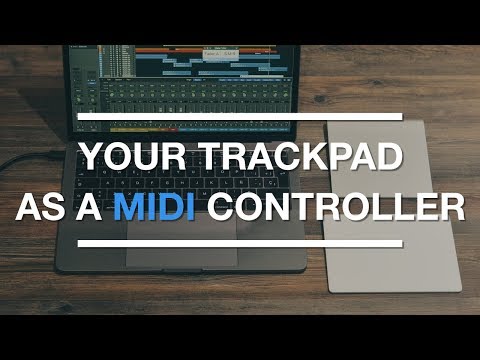
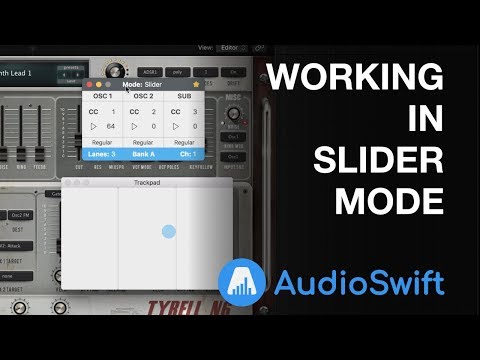
But actually there is already some software which let you use the trackpad as multi-touch control for your DAW and plug-ins, as XY pad, note input, strumming, scale etc.
F.e. this here (there are a few more i think):
Or this:
@TheoryNotes A whole lotta good points brought up in your 2 posts.
I agree with your breakdown of input device precision, and its implications. Although the iPad is pretty sloppy with touchscreen input, and iOS is purposely limited in ridiculous ways, the music apps and tools that iOS developers have created keep me interested in the iOS platform. There are a few great things about iOS and the devices, many annoying things as well, and even a few major problems that keep these devices from being totally reliable for pro use.
But still, all of these amazing music apps make it worth dealing with the shortcomings, for me.
@CracklePot
I think at this point I'm thinking more about what I'd like to encourage.
Do I want to encourage things down this Apple iOS route, where they control the app store and take 30% of the devs sale, and force devs into that mouse trap where Apple can destroy their app and its marketability with a single iOS upgrade, and not to mention cause the possibility that an app I like to use will vanish from my device?
Or would I rather encourage the macOS route where devs and market standards can put pressure on Apple to maintain the general open ecosystem macOS currently has?
I have to say, my apps seem to survive much longer on mac than iOS, and as a consequence I have given up on supporting anything other than Apple apps through the mac app store. I'd much rather buy a license direct from a dev's site at this point.
I just don't like how apple runs its app stores. It makes me sick actually, since I believe they are seriously killing app development and actual innovation because of it.
I''ve reached the point with iOS that I just don't believe the company which created a computing device should control the available apps or store for that device.
I'm really thinking lately about how to encourage things down the more open macOS route.
@Cib
I wanted to hit on a similar point to that here too.
I can play a guitar with my eyes shut, but I definitely couldn't say the same about any of the instruments in GarageBand iOS.
I'm guessing someone like Chris Lord-Alge could use his entire mixing desk with his eyes closed.
I think that type of direct connection is a meaningful thing, being able to make intelligent expressions without visual reference being a necessity.
I don't think we should really try to convince ourselves that a flat-screen visual touch-input actually can ever truly replace that, or ever be the only be all to end all interface.
For me, the focus has to be on what delivers the most meaningful relationship between the input and the software.
I'm hoping for very well designed hybrids that use the touchscreen device where appropriate, and the most meaningful hardware control where appropriate.
I also hope that the hardware doesn't rely on iOS as Apple will surely ruin it in time. Much better to have their own system or something built on an open standard.
I also just tried to type this message on my Macbook with my eyes shut, it kind of worked but if I had plugged in my logitech keyboard, it would have been much easier and felt better on my fingers.
Hopefully Apple can someday give up this flat fetish.
I actually disagree. Animoog was an eye-opener for me. I spent so many hours playing that it became an instrument. I could absolutely play it with my eyes closed. It has such unique sounds, controls, and synth behaviour that can be mastered by learning to rub and tap on glass in learnable, consistently reproducible patterns.
A physical instrument will never be able to replicate or replace Animoog on an iPad for producing that type of expressive instrument. For me, that IS the new paradigm: an iPad can be an instrument that is unique.
At the same time if you think iOS has to "ever be the only be all to end all interface." then that is a level of shift that we can all agree will never happen. The paradigm isn't that computing/ music will shift to touchscreen devices only or primarily. There will always be guitars, pianos, Moogs, ... and computers in some form for music.
The new paradigm is that a touchscreen computer is now a legitimate musical instrument. I really don't know but I hope the prevalence of this type of musical instrument will continue to grow.
And i disagree with this : )
Animoog is great but the Roli Seaboard 5D app (not that blocks thing) is a million times more expressive, especially with 3D touch.
Also playing Animoog with a Seaboard or other MPE controller with tactile feedback is day and night.
But i agree that Animoog is great but still playing on a flat screen with limited to 4 voices isn´t the best thing compared to other options.
But i would like you to prove me wrong and show me how you play this blind (without a scale mode).
I really love it too but mostly it´s a random melody inside a scale rather than "real" playing.
Right, there will always be better options for the “most expression” possible. Of course you can add more expressive controllers, record and tweak the MIDI data, use Roli 5D, etc.
For me the epiphany was: hey this iPad now exists as a genuine, standalone instrument! And that moment happened 5 years ago with Animoog for iPad.
Yes, scale mode is absolutely part of the instrument same way as frets on a guitar are essential for most guitar playing styles.
If it feels like "random melody", try to put in another 2hrs/evening for several months in a row. There is nuance and control that can be very accurate and consistent. If Roli 5d is even more expressive then I would say that app would prove my point even better. (I've just never used 5d)
also, violin is not less of an instrument for being limited to 4 voices, so I'm not sure why polyphony would be a factor. Sure a violin is capable of a smaller sound palate than an 88 string piano... because it is a different instrument.
ps. no hard feelings @cib I have huge respect for your music. GalaxyExplorer was one of my early iOS inspirations
But velocity and real feeling of keys is what i miss....and i´m even not a good player.
But Animoog is maybe still Moog´s best app for multi-touch.
And yes, i agree that an iPad or iPhone can be a new form of instrument as well.
Like i said i like some tools more with touch-control, some with a real keyboard and actually a lot works even best via my macbook keyboard for fast playing and switching etc. which i can´t do in a controlled way on a touch-screen.
But indeed something like ThumbJam to control plug-ins is also a great combination if not overused.
I also really like the pitch correction in Animoog and Model 15. I always put it slightly on and it works nice.
But i mainly use just 2-3 presets from Animoog since i find it all a bit the same after a while and the onyl preset i really love and tweaked a lot for my own use is the wavedance preset.
oh goodness, don't get me started on pitch correction with Animoog. Epic, weird sounds are possible with the pitch wandering off-key.

I also like to hold a key and then just scroll the keyboard for some nice glides and glissando.
I also love some of the Garage Band things.
I think the right tool with the right input is the way to go.
Finger Fiddle is awesome f.e......but sadly it could be much more and feels to limited as it is.
Such a control device plus a high quality sound like some of the better sample libraries plus better physical modeling would be perfect. And we are quite there.
I see iOS as a good controller indeed rather than a workhouse.
If the Moog apps would have microtuning they would be 10 times better even
I used to feel the same way about Animoog.
What changed for me was getting deeper into Logic Pro X and the built-in Alchemy while using the Logic Remote on my iPad.
I always keep in mind that the Macbook does include a touch input through its touchpad. At some point I also learned about a feature in the accessibility settings of macOS called "three finger drag" which is not default, but is basically the smoothest way to turn dials in macOS, allowing making a drag operation without making a click.
Also important to point out is that it isn't necessary to actually click the touchpad to select something as a tap will do the same thing. Also, using two fingers is the gesture to scroll.
Logic Remote will usually be able to show both a keyboard and the smart controls for Alchemy, which includes the morphing pad we all know as well as a couple x/y pads.
One of the first things I noticed is that I much prefer playing Alchemy through the qwerty keyboard using musical typing, even without any velocity control over playing the flat screen keyboard in logic remote as each tone has its distinct physical identity, and like I said before, I can close my eyes and get very deep into what I'm playing. This will lead me eventually to get a midi keyboard so I can get the same feeling along with velocity control back, and a longer range of keys, which I didn't expect wanting because I am primarily a guitarist.
Then, in direct comparison, I eventually realized that visually distracting myself by going to the ipad and interacting with the morphpads, xy pads, and knobs was not a better or usefully different experience to using the three finger drag option on the same Smart Control area within Logic, and basically does nothing more than "take my eye off the ball".
At that point I really began to question the benefits of a touchscreen itself, which requires by its very nature that the screen be obstructed in order to be viewed at all.
Obviously mobility is nice, but it comes at a significant tradeoff in capability.
I have access to a ridiculous number of shortcut key commands through the qwerty keyboard which make production far quicker. The only way to do these things on mobile currently is to use menus, since the experience of the ipad assumes a physical keyboard won't be present, and thus devs are unlikely to add them
Also, something like Alchemy is so much deeper and more capable in Logic than any mobile iteration of it has been, not to mention the multitude of other AUs available on Mac compared to anything that is or will be available for iOS.
At this point, I'm really on the fence regarding keeping my 10.5 iPad Pro, as I just don't support the direction of this business model.
I like live loops in GarageBand iOS but only because I can send the file directly to Logic later. I don't know how long that will hold. I liked the idea of the logic remote, but its really more of a distraction than anything truly useful.
Through this lense, I see Animoog in a completely different light.
I could also easily three finger drag its xy pad.
I loved the scale feature, but a simple key re-mapper tied to a midi FX AU would do the same trick.
Or better yet, Animoog as an AU for Logic.
So my take at the moment is that I don't see what iOS brings to the table other than greater mobility with drastic tradeoffs, and this is just my experience being on the platform since 2011.
I hope Apple can change direction on this eventually and bring a focus to taking macOS to smaller devices, rather than expanding iOS into larger devices.
The funny thing for me is that I got my Mac 3 years after I got my first iOS device.
iPad 12.9 with GarageBand still does it for me for composing. I find everything else on desktop and mobile annoying and full of UI friction. With the possible exception of ProTools - I enjoyed MIDI/Audio in that environment as well.
Just to reference the original post again, my current setup on macOS and overall preference is to use a normal logitech mouse to get place to place on the screen, use the touchpad on the macbook to tap-click and gesture (two and three finger drags mostly), the qwerty keyboard for shortcuts/musical typing/and typing, and almost always the giant dial on my Apogee One to control volume. I think I will be scoping out into more hardware controllers at this point, from keys/drumpads to mixing tools.
I used to think that iOS devices would replace my needs for a field recorder, but an iOS device + audio interface + mics + power/battery pack is a complete mess compared to the simplicity of my Zoom H4n.
I should also say that I've had the apple pencil for about 6 months now and really don't like using it. At some point the feel of that material and sound of it as it touches the glass started to sound/feel like fingernails on a chalkboard for me, so I've ended up almost never using it. I have to almost force myself to use it and get into it, but I've never been able to gel with it.
For me it is the mobility of iOS devices that are their primary capability.
Best of both worlds for me and i´m sure it will evolve.....
@cib @Dubbylabby @TheoryNotes it is interesting to me how each of you seem very disappointed in iOS as a music platform and give all sorts of reasons why you prefer other platforms for making music. Any instrument, music hardware, software, or OS will have strong and weak points. For my needs iOS works well.
What motivates you to spend so much time commenting on a forum focused on iOS which you find significantly lacking versus on sites that are more in line with your preferred modes/tools for music making or even making music itself?