Loopy Pro: Create music, your way.

What is Loopy Pro?Loopy Pro is a powerful, flexible, and intuitive live looper, sampler, clip launcher and DAW for iPhone and iPad. At its core, it allows you to record and layer sounds in real-time to create complex musical arrangements. But it doesn’t stop there—Loopy Pro offers advanced tools to customize your workflow, build dynamic performance setups, and create a seamless connection between instruments, effects, and external gear.

Use it for live looping, sequencing, arranging, mixing, and much more. Whether you're a live performer, a producer, or just experimenting with sound, Loopy Pro helps you take control of your creative process.

Download on the App Store

Loopy Pro is your all-in-one musical toolkit. Try it for free today.

Live streaming a gig

Looking for advice and experiences for live streaming of a gig. Has anyone done it?

Def Robot will be playing their first gig proper on Friday the 20th of March at The Salty Dog in Northwich.
With the growing concern around public events, this may become a more regular way of watching concerts.
Looking at Facebook Live or YouTube Live and hooking a Microphone up to an iPad. Or will the internal mic be sufficient?

Will I be able to hook up some sort of compressor, to stop clipping etc?

Thanks for any tips!

Comments

  • Internal mic will not be sufficent but if you hook a mic up to you iPad then run it through AUM you can add compression or FX in AUM.

  • @Poppadocrock said:
    Internal mic will not be sufficent but if you hook a mic up to you iPad then run it through AUM you can add compression or FX in AUM.

    That’s awesome! Thanks!

  • I like that you are thinking of ways to adjust your art. For the audio portion of the stream, the principles are the same for getting a good recording of a concert. The best sound for recording a concert involves getting the mix from the front of house. If it is a large venue, or if everything is electronic, the mix should be good right from the board. For small venues, and with some loud instruments in the band, the board mix will be lopsided, like for a rock band, it will be a ton of vocals, some kick, a little bass, and no guitar or snare. Some people put a mic back at the board for room sound, and add it to the board mix, but there is a better approach. The mic at the board has 3 problems- it hears instruments that aren’t in the mains, good, and the balance is good, but it is washy sounding. So you mix in the board mix, but because the board mix is lopsided, the sum is halfway lopsided. Also the time it takes for the sound to get from the speakers to the make makes phase problems with the board mix, when summed together. What you need, to mix with the board mix, are the sounds that are not in the sound system, micced at a place where the sound is in phase with the mains. The spot is at the front of the stage, pointed toward the band, in a place that doesn’t pick up a lot of stage monitor. The sound will be in phase because the mic is on the same plane as the mains. I use a zoom recorder for this mic often, using the built in XY stereo mic. Even better are a pair of small diaphragm condenser mics on a stereo bar, either XY, or ORTF pattern is more interesting sounding in headphones. Then you can mix that with the board mix and find a balance that sounds really clear.

    You can also use a figure 8 pattern mic (or a pair spaced apart for stereo) for the stage mic, and it will pick up the audience and some room ambience, as well as the band, but thoroughly reject the monitor bleed.

    Getting the board mix to the camera can take some doing if the board is at the back of the room, like a typical club. If it is a special send from the board and you have time to get it set up with the sound person, you may be able to send it back through the snake to the stage, on an unused send channel, or you can go backwards over an unused input channel with a pair of XLR to TRS converter cables, if you have both sexes of XLR.

    Or, if you don’t have the time to set something like that up, a stereo mic on stage, near your head, where it sounds good, can be pretty clear, as long as your monitor mix is good. Your viewing audience hears what you hear. It will be less washy than a mic at the back of the room or in the crowd, by your camera.

    I’d recommend a brick wall limiter on your mix, either hardware or in the box, so that you send a good level out to the viewers, and you don’t clip, or worse, have too much headroom and things can get surprisingly loud and hurt peoples ears with headphones cranked up to hear the quiet parts. Infinity to one ratio, 0dB threshold, short attack, medium release (like 50ms), and with enough gain going in to the limiter that you see the reduction meter kick on on the loudest notes.

    Good luck!

  • @Processaurus said:
    I like that you are thinking of ways to adjust your art. For the audio portion of the stream, the principles are the same for getting a good recording of a concert. The best sound for recording a concert involves getting the mix from the front of house. If it is a large venue, or if everything is electronic, the mix should be good right from the board. For small venues, and with some loud instruments in the band, the board mix will be lopsided, like for a rock band, it will be a ton of vocals, some kick, a little bass, and no guitar or snare. Some people put a mic back at the board for room sound, and add it to the board mix, but there is a better approach. The mic at the board has 3 problems- it hears instruments that aren’t in the mains, good, and the balance is good, but it is washy sounding. So you mix in the board mix, but because the board mix is lopsided, the sum is halfway lopsided. Also the time it takes for the sound to get from the speakers to the make makes phase problems with the board mix, when summed together. What you need, to mix with the board mix, are the sounds that are not in the sound system, micced at a place where the sound is in phase with the mains. The spot is at the front of the stage, pointed toward the band, in a place that doesn’t pick up a lot of stage monitor. The sound will be in phase because the mic is on the same plane as the mains. I use a zoom recorder for this mic often, using the built in XY stereo mic. Even better are a pair of small diaphragm condenser mics on a stereo bar, either XY, or ORTF pattern is more interesting sounding in headphones. Then you can mix that with the board mix and find a balance that sounds really clear.

    You can also use a figure 8 pattern mic (or a pair spaced apart for stereo) for the stage mic, and it will pick up the audience and some room ambience, as well as the band, but thoroughly reject the monitor bleed.

    Getting the board mix to the camera can take some doing if the board is at the back of the room, like a typical club. If it is a special send from the board and you have time to get it set up with the sound person, you may be able to send it back through the snake to the stage, on an unused send channel, or you can go backwards over an unused input channel with a pair of XLR to TRS converter cables, if you have both sexes of XLR.

    Or, if you don’t have the time to set something like that up, a stereo mic on stage, near your head, where it sounds good, can be pretty clear, as long as your monitor mix is good. Your viewing audience hears what you hear. It will be less washy than a mic at the back of the room or in the crowd, by your camera.

    I’d recommend a brick wall limiter on your mix, either hardware or in the box, so that you send a good level out to the viewers, and you don’t clip, or worse, have too much headroom and things can get surprisingly loud and hurt peoples ears with headphones cranked up to hear the quiet parts. Infinity to one ratio, 0dB threshold, short attack, medium release (like 50ms), and with enough gain going in to the limiter that you see the reduction meter kick on on the loudest notes.

    Good luck!

    This is absolutely fantastic!!
    Thanks for the detailed advice!
    I think I’ll take my own mini mixing desk to the gig and get a few sources in the mix like you described.
    Board mix, stage mic and room mic.
    Obviously will have to test for any phasing...
    Yeah, a brick wall limiter seems the best idea. I can try all this at next rehearsal.
    Thank you so much for this!

  • Getting a board mix into your iOS device for streaming is right up the alley of our iRig Stream.

    We used it for every live stream (Instagram in these cases) during Winter NAMM and the sound quality was great. We went out from the board and the feedback from people who were watching the streams was that when Tom Lord-Alge hit play on the session he was talking about it sounded just like you were listening to the song directly/locally.

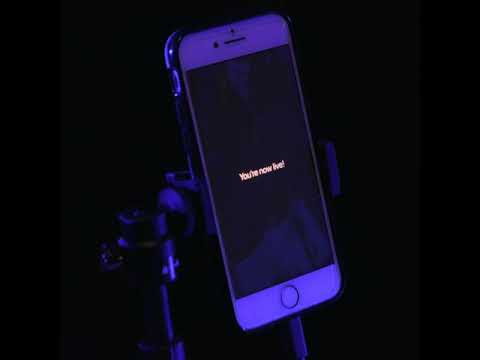
    We've also got some short videos that show the difference between onboard mic and iRig Stream like this one - we have a guitar instructor and a drummer on separate videos too but the DJ example shows a full range mix coming from the board:
  • @DefRobot said:

    @Processaurus said:
    I like that you are thinking of ways to adjust your art. For the audio portion of the stream, the principles are the same for getting a good recording of a concert. The best sound for recording a concert involves getting the mix from the front of house. If it is a large venue, or if everything is electronic, the mix should be good right from the board. For small venues, and with some loud instruments in the band, the board mix will be lopsided, like for a rock band, it will be a ton of vocals, some kick, a little bass, and no guitar or snare. Some people put a mic back at the board for room sound, and add it to the board mix, but there is a better approach. The mic at the board has 3 problems- it hears instruments that aren’t in the mains, good, and the balance is good, but it is washy sounding. So you mix in the board mix, but because the board mix is lopsided, the sum is halfway lopsided. Also the time it takes for the sound to get from the speakers to the make makes phase problems with the board mix, when summed together. What you need, to mix with the board mix, are the sounds that are not in the sound system, micced at a place where the sound is in phase with the mains. The spot is at the front of the stage, pointed toward the band, in a place that doesn’t pick up a lot of stage monitor. The sound will be in phase because the mic is on the same plane as the mains. I use a zoom recorder for this mic often, using the built in XY stereo mic. Even better are a pair of small diaphragm condenser mics on a stereo bar, either XY, or ORTF pattern is more interesting sounding in headphones. Then you can mix that with the board mix and find a balance that sounds really clear.

    You can also use a figure 8 pattern mic (or a pair spaced apart for stereo) for the stage mic, and it will pick up the audience and some room ambience, as well as the band, but thoroughly reject the monitor bleed.

    Getting the board mix to the camera can take some doing if the board is at the back of the room, like a typical club. If it is a special send from the board and you have time to get it set up with the sound person, you may be able to send it back through the snake to the stage, on an unused send channel, or you can go backwards over an unused input channel with a pair of XLR to TRS converter cables, if you have both sexes of XLR.

    Or, if you don’t have the time to set something like that up, a stereo mic on stage, near your head, where it sounds good, can be pretty clear, as long as your monitor mix is good. Your viewing audience hears what you hear. It will be less washy than a mic at the back of the room or in the crowd, by your camera.

    I’d recommend a brick wall limiter on your mix, either hardware or in the box, so that you send a good level out to the viewers, and you don’t clip, or worse, have too much headroom and things can get surprisingly loud and hurt peoples ears with headphones cranked up to hear the quiet parts. Infinity to one ratio, 0dB threshold, short attack, medium release (like 50ms), and with enough gain going in to the limiter that you see the reduction meter kick on on the loudest notes.

    Good luck!

    This is absolutely fantastic!!
    Thanks for the detailed advice!
    I think I’ll take my own mini mixing desk to the gig and get a few sources in the mix like you described.
    Board mix, stage mic and room mic.
    Obviously will have to test for any phasing...
    Yeah, a brick wall limiter seems the best idea. I can try all this at next rehearsal.
    Thank you so much for this!

    Yeah great post, I love reading this stuff, I can tell you are speaking from experience here :)

Sign In or Register to comment.