Loopy Pro: Create music, your way.
What is Loopy Pro? — Loopy Pro is a powerful, flexible, and intuitive live looper, sampler, clip launcher and DAW for iPhone and iPad. At its core, it allows you to record and layer sounds in real-time to create complex musical arrangements. But it doesn’t stop there—Loopy Pro offers advanced tools to customize your workflow, build dynamic performance setups, and create a seamless connection between instruments, effects, and external gear.
Use it for live looping, sequencing, arranging, mixing, and much more. Whether you're a live performer, a producer, or just experimenting with sound, Loopy Pro helps you take control of your creative process.
Download on the App StoreLoopy Pro is your all-in-one musical toolkit. Try it for free today.
Comments
Good point
And tempo changes...
Yep
Nice example
Yes, yes, yes! ....and further validation of that point...
Re: The Beatles - We Can Work it Out
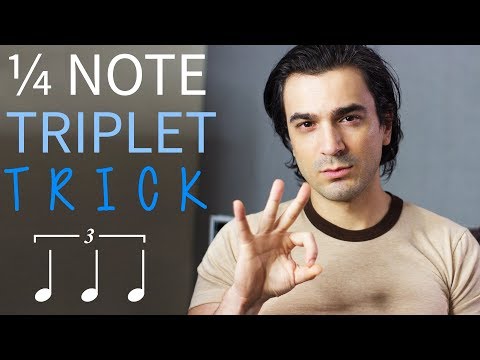
It's the quarter note triplet trick.. the bar lengths remain the same (4/4) and the tempo remains the same.. just the division of the beat and the way it's played makes it feel like a slower "oom-pah-pah" beat (3/4).
Divide each quarter note (4 notes per bar) into eighth note triplets (12 notes per bar) then simply play every other note of the 12 notes = quarter note triplet (6 notes per bar).
This video explains it in a clear way (go to 3:20 specifically for the quarter note triplet part).
The tempo slows just a bit, but the meter doesn’t really change necessarily it’s more like triplets to me like what royor was saying.
I agree though. iOS developers need to get on board with the time signatures!! I will be very happy if they do.
Unfortunately, I think most people don’t care about them. So we are kind of just going to have to keep hoping the developers of the apps we like use them themselves.
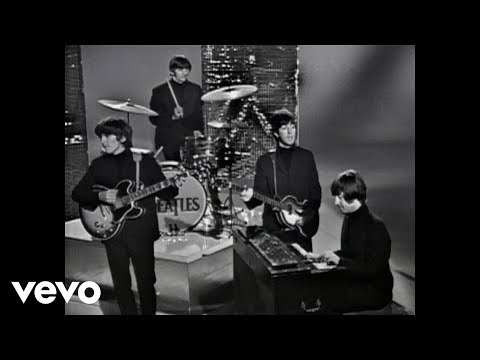
It’s 4 bars of 3/4 time inserted into 4/4 time..‘Twas George’s idea .. Also “All you Need is Love” juxtaposes 7/4 and 8/4 time.
https://en.m.wikipedia.org/wiki/We_Can_Work_It_Out
That's actually the laziest feature no DAW really needs. Make your new section with diff time sig or tempo in another project you dummies. That or get off the grid & you might learn a few things!
Lovely to see them trying hard not to laugh at playing rubbish to the playback
Apparently you've never heard about pattern-based DAWs with fixed pattern length and people who actually love to use quantisation, not necessarily because they're dummies.
As for the meter of this song - it's just 3 bars of 4/4, nothing complicated
I agree though that we need more sequencers with freedom to compose what we want!
Yep and yep and yep @rs2000. The meter change can be done in 4/4 as triplets but the "magic" of that bit at 0:45 is, for me, the way each bar is a little slower than the last (*). I wonder if that was intentional or if they were pissed at Ringo until the world fell in love with it?
* Rallentando? Lentando? https://en.wikipedia.org/wiki/List_of_Italian_musical_terms_used_in_English#Tempo
Just turn quantize off and play however you like
@rs2000 : No, that’s not correct : I’m a professional drummer. That’s four bars of 3/4 time. I’ll let Paul McCartney tell it .
“I took it to John to finish it off, and we wrote the middle together. Which is nice: 'Life is very short. There's no time for fussing and fighting, my friend.' Then it was George Harrison's idea to put the middle into 3/4 time, like a German waltz. That came on the session, it was one of the cases of the arrangement being done on the session.[5]”—Paul Mcartney
From the Ian McDonald book, “Revolution In the Head”.
That’s not a “triplet “.. That’s a meter change
Sorry guys.. https://www.quora.com/What-are-some-songs-by-The-Beatles-that-incorporate-shifts-in-meter-e-g-4-4-to-3-4
Even my old Alesia MMT8 had this feature as does my Korg Kross .
Next , some of you will tell me that Zappa’s music doesn’t have meter changes .
As you can see there is a bar of 2/4 time followed by four bars of 3/4 followed by 4/4
https://www.google.com/search?rlz=1CDGOYI_enUS800US800&hl=en-US&biw=414&bih=620&tbm=isch&sa=1&ei=wXC0W7HLBZKt_Qblm4HYCw&ins=false&q=we+can+work+it+out+sheet+music+&oq=we+can+work+it+out+sheet+music+&gs_l=mobile-gws-wiz-img.3..0i30j0i24.3656.12906..13487...0.0..0.198.2532.12j12......0....1.........0j35i39j0i13j0i8i30.Yq2RlcymT5Q#imgrc=it3YmfvLj4MnDM:
I guess we're both correct.
The song is based on repeating 3 bars of 4/4 while the part at 0:45 is indeed 4 bars of 3/4 (sorry I dind't watch this long
Zappa is good. He's even explaining it for the newbies
Just saying, there are many ways to accomplish things. I never said people who make quantized music are dummies!
In your typical timeline DAW there are almost unlimited ways to still use the grid/quantize and have any time sig you like while keeping it set at 4/4 in the DAW.
Tempo changes other than your typical fractions, just start a new project or jump off the grid.
Absolutely.
The only thing to consider is that slowing down tempo in a DAW that's pattern-based will usually decrease the resolution in time, which can become very audible at 20..30 bpm, kind of an "unwanted quantisation".
I know you can just start a new project . But coming from the old school hardware sequencers. The MMT8, the Yamaha SY85, the Korg 01W, the Motif .The Boss Dr. Rhythm drum machines. . This was something we never had to think about .. Thank goodness NS2 will enable us to do this easily.
!!
That's pretty cool about NS2. & apologies if I came off rude, a workaround is never as good as a built in option.
Oooh, I did not know this. I've never dropped down to that speed!
True. I think in my last 50 tracks i almost always use just 4-5 different BPM speeds (more related to delay and other FX sync) and a simple 4/4 in the sequencer. But i normally never use the quantize option and so sometime notes seems out of sync and when i quantize them and hear back it sounds terrible. So that natural not always on point timing and playing improved tempo changes in realtime is what i like.
An EDM track might do better with hard quantized 4/4 and all that but i even here prefer some odd timings here and there for the slight human feels against the machine gun effect.
There are of course also some interesting tools out there for iOS, windows and mac to achieve odd timings within your sequencer which might not can achieve that. There are even some kind of tools which can sync via size like meters or frequency of your input source and other obscure things.
There are even things like multi-band sync where specific bands of a sound source might have another sync as the other bands and so on.
Almost too much experimental stuff to explore, doh´.
Start a new project basically means it cant be used live though.
Why can't it be used live?
fwiw, I wasn't trying to suggest that there isn't a meter change; was suggesting that you could accomplish that change in 4/4.
But! What I definitely was trying to say is that the "special" thing about that section (to me) that you absolutely can not do in a sequencer that doesn't support it is the slow down (unless it's a linear sequencer where you decide to entirely ignore the tempo, I guess).
In other words, yes please to "Why EVERY sequencer needs odd bars (^and fluid tempo changes)".
A little slow down at the end of a song (rallentando) used to be a pretty standard thing, I think tempo changes are part of a standard musical vocabulary. Auria supports time signature and tempo changes, I agree that it should just be a standard inclusion in every DAW.
Apologies in advance for the smartass response, but I probably just don't understand your question...
Using an app with no tempo changes live for songs with tempo changes (vast majority of human music).
[band plays the intro and verse]
To audience "okay, sorry, loading the chorus"
[band plays chorus]
To audience "sorry guys, ya, loading the verse."
I don't think there's anything controversial about it. Of course, you can disregard the sequencer's ruler and play whatever you want, or break a piece up into separate projects in order to accommodate a time change. When an app would force you to do that, I know the developer is either intentionally limiting it to simplify coding, or they have a narrow knowledge of music.
If I was developing a sequencer, it would start with a tempo and a time signature track. That's just basic for music composition. However, most pop music can be rendered in a mechanical 4/4, and if one needs to do more with it, they can take the project to any pro DAW and finish it there. For live performance, pretty much the same solution---move it to another app and make the adjustments. If something needs significant modification, you know you started it in the wrong app.