Loopy Pro: Create music, your way.
What is Loopy Pro? — Loopy Pro is a powerful, flexible, and intuitive live looper, sampler, clip launcher and DAW for iPhone and iPad. At its core, it allows you to record and layer sounds in real-time to create complex musical arrangements. But it doesn’t stop there—Loopy Pro offers advanced tools to customize your workflow, build dynamic performance setups, and create a seamless connection between instruments, effects, and external gear.
Use it for live looping, sequencing, arranging, mixing, and much more. Whether you're a live performer, a producer, or just experimenting with sound, Loopy Pro helps you take control of your creative process.
Download on the App StoreLoopy Pro is your all-in-one musical toolkit. Try it for free today.
Comments
I'm no expert luthier, but I've studied a lot and have built a few acoustics. Replacing a bridge is a traumatic thing. Doable, but only for true experts, and even then not without risk.
There are lots of methods to capture guitar sound, but back in the day you could route multiple mics to different multitrack tape tracks and mix later. Not quite as easy to do it for a single take with a modern DAW unless your interface has enough inputs to record multiple mics from the same performance.
Had a great conversation a few years back with a friend who has worked his entire life in studio recording, and he said he wouldn’t buy anything less than 4 stereo inputs for an interface based on recording guitars. He would DI the guitar to go straight into the desk, point a dynamic mic straight at a speaker cone, offset another dynamic mic from the cone at the same distance, and place a condenser mic in the room to capture a more ambient sound. Once you have done that you then need to figure out what the sweet spot for each mic is, and maybe place either baffles or a reflective surface at points around the amp to get whatever sound you want. This is all assuming you’re overdubbing a basic track, as live recording in a room is exponentially harder to mic up.
In fairness, anything he recorded sounded amazing.
Thinking about this some more: The impact of angle across the nut is surely going to be unnoticeable. The top and bottom strings will be unchanged. The next two strings inward will have a very slight change in angle given that the tuning posts are further from the nut. I'd be amazed if it affects the tone noticeably.
That leaves the middle string. Look at the geometry though. The middle two strings have a slight bend across the nut already. The middle one will have a slightly larger offset, but the tuner is also the farthest from the nut, so the angle is going to be very slight. You could pick either one - the offset will be the same. I'd argue that the torsion imbalance added by that bend is negligible as well. An acoustic guitar neck is more stable than an electric.
I would explore keeping the saddle in place and instead drilling one new bridge pin hole dead center. Again, the top and bottom string should be unaffected. The next two in will have a slight bend, but it probably would be small enough to not matter (hopefully). I think you could get away with drilling that center hole if you place it slightly farther away from the bridge. The two unused holes could be filled with wood shavings saved when drilling the new hole, mixed with cyanoacrylate glue. The result should be just as strong as the original and not too noticeable due to the matching wood shavings. It won't be as nice looking as the original, but probably not too noticeably so.
I wouldn't do any of this to a lovely Taylor myself, but that's where my mind went with it as I was thinking about the whole thing.
That makes sense… the bridge is the physical transfer point from physical motion to reverberating wood. Definately not something to rip out. But filling the existing holes and re-drilling new holes might be something the luthier might entertain. He re-builds a lot of guitars after airline damage and other tragic events in a guitar’s long life. But I don’t think it will be cheap if he is interested in the project.
Ahh come on. Are you telling me you don't have a trusty electric drill kicking around somewhere out in the garage?
(just kidding)
Altering the guitar seems serious. I think you'd want a new neck as well. Why not just remove a string? If you space the 5 strings across a 6 string neck it's not going to be pleasant anyway. Might as well just remove the top or bottom string and keep the string spacing.
I was thinking the same thing. Keith Richards’ style. I don’t bother anymore but I’ve strung my Tele this way, open G with the bottom string removed. It was still easy to play.
I will soon have to travel quite alot so guitar, even just one, becoming very impractical. I already down sized to one classical and one electric but from now on I will just use software and iPad. Sad for now but I take it as a positive change
I didn't know that was Keith style. It also gives 2 options of removing either the top or bottom string depending on preference.
Playing in open G, without the low E string or with the E tuned down to D, is great fun. (“Holy s**t, insta-Keith!) Here’s a good video by Rob Chapman…
Works really well on acoustic, too. Before performing surgery on a guitar, see if this does the job.
You guys are dreaming of 5 strings guitar while I play 7 strings and @yellow_eyez plays 8 strings guitar.😂
It sure removing the top string would have quite the same effect. I think his reasoning was something along the lines of it’s easier to think about barre chords if the open low string is a G rather than a D.
4, 6, and 7 strings more than needed for a decent guitar solo.
A one string guitar is enough to play said solo.
Interesting thought! I never considered using multiple strings in a solo. Is that even possible?? Or is it like that old myth that some people use more than one finger at a time to play piano?
Great… GAS in high gear: Now he’s got a 10-string variant.
https://www.instagram.com/reel/DNtxlVJWEfS/?igsh=NTc4MTIwNjQ2YQ==
More than one finger on a piano ! You trying to play some post modern craziness ? 😂
I found some string gauge recommendations for the 5-string jacob Collier set ups in the Guitar Sub-Reddit. If anyone tries this set up please share your impressions:
My first thoughts are what gauges are best for which pitches… I know you can push strings above of below ideal and get different impacts on tone, sustain, fret noise, etc.
I wonder what it might be like to do the first 2 strings with good bass response: maybe even down an octave and a lighter gauge for the top three strings. There’s a lot to play with here.
It’s hard to put more than one finger at a time on a piano key, so don’t know how that would work.
as they say ... if you have to explain the joke, it wasn't very funny. 😂
Nembrini has a sale on all their amps so I could, as I said I would: get the 'NA Jmp Pro'. Happy with it so far. They usually don't ship with very good presets but this one have a few, e.g 'Lester Drop D' is sweet. Good!
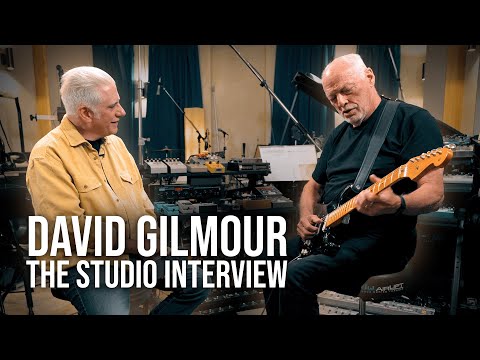
Superb intervju/conversation with two very knowledgable peoples. So many little nuggets on effects what not, I love it. You don't need to like Pink Floyd or Gilmour to appreciate it, I think.
I picked up the Axe IO One interface by IK Multimedia yesterday. I got it to use the Amp out feature for some ToneX captures. I’m excited to try out ToneX and AmpliTube in Logic Pro X. It’s also nice to have a dedicated interface for my guitar - especially for a consistent MIDI Guitar 3 setup. Less shuffling my irig interface between my iPad and Mac now.
Yes it’s a very good interview even for somebody who don’t really care for PF.
Overwhelmed and a bit confused. Saw Arteras posts today on the forum bout the sale. So there’s Gigfast (artera dsp), there’s Aurora dsp (rhino, etc), theres tonex (which is IK multimedia? and amplitube). Tonestack pro. Overloud THU. And on pc there’s also neural dsp that I hear is great. So… do all these companies/apps share the same technology/modeling? Or does each have their own tech/engine under the hood of their stuff? And if they’re not all just different coats of paint over the same brains, how is one supposed to choose? Which is best?
@Squishy Overloud, NeuralDSP and IK have their own tech. Gigfast is (I believe) based on their own advanced version of NAM (Neural Amp Modeler), not sure how similar it is. I'm not sure about Tonestack but IIRC their apps predate NAM tech. ArteraDSP purport to have their own tech which seems likely but I have no faith in anything they say so you'll have to work that one out yourself.
Neat, so they ARE all running on different engines. I tried a bunch of them when I first got an ipad (the trials or whatever). They all just sounded the same/were the same means to an end. I went with Tonestack cause it was a shitload of content and on sale, but now I’m starting to feel like it’s the one that’s kinda left in the dust, probably due to an outdated engine like you said. But I still don’t know where to start when picking a new platform (NAM XT is as far as I’ve dipped my toes). And who knows, everyone is fawning over old tascams these days, ten years from now people might be clamoring for that old Tonestack sound haha
@Squishy I find NAM based, Tonex and THU to be at the top of the game. Artera NAMXT, Tonex and THU for me at present. But I'm having issues with Gigfast. If they are address it would probably be my go to because it's simple and sounds fantastic.
My favorite is Aurora DSP. Dead Kitty and Ironheart.
How do you pick ? If you have a desktop you could download the demo and compare them. If not listen to Demos on YouTube.